
How to Break a Lease in Texas: Tenant & Landlord Rights (2026 Guide)

Life changes - a new job, a family emergency, a home purchase - and sometimes a signed lease no longer fits. If you're a Texas renter wondering how to break a lease in Texas, the good news is that you have more rights than many people realize. The key is knowing which protections apply to your situation, giving the right notice, and understanding what you may still owe.
This guide walks through your legal early-termination rights, the difference between penalties and reletting costs, and how a professional property manager handles a lease break for both renters and owners.
This article is general information current as of July 2026 and is not legal advice. Texas law changes, and every lease is different. For guidance on your specific situation, talk to a licensed Texas attorney or a legal-aid provider.
First: read your lease
Before anything else, pull out your lease and read the sections on term, early termination, notice, and fees. Texas leases often spell out exactly what happens if you leave early - including any buyout option, reletting fee, or notice requirement. Your lease is the starting point for every conversation that follows.
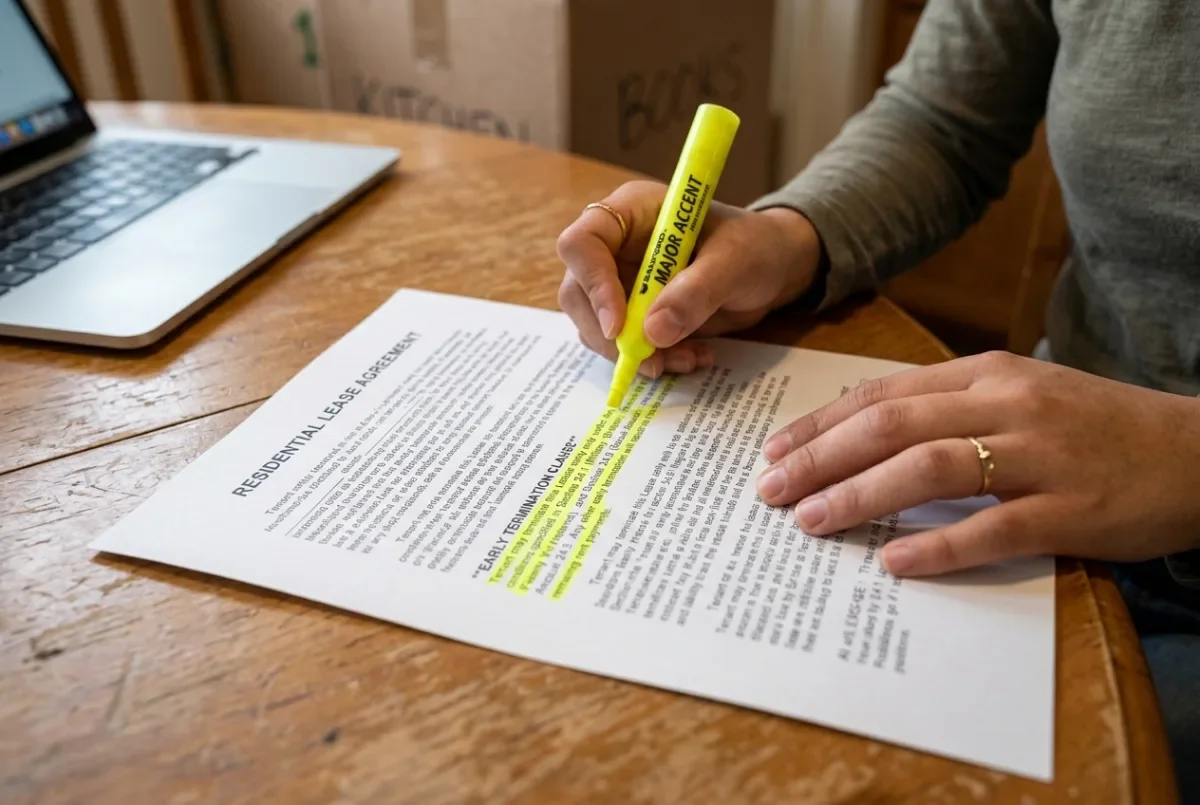
Some leases include a lease-break (buyout) clause that lets you end the lease by paying a set fee - often one to two months' rent. If yours does, that's usually the cleanest path out, because it caps your liability up front.
Legal reasons you can break a lease without penalty
Texas law gives renters the right to terminate a lease early - and avoid further liability - in several specific situations. These are statutory rights that generally override what your lease says.
The Texas State Law Library guide to ending a lease is a helpful, plain-language overview of each one.
Family violence, sexual assault, or stalking
Under Texas Property Code 92.016 and 92.0161, a tenant who is a victim of family violence, or of certain sexual offenses or stalking, may end the lease early without penalty. You must provide your landlord with the required documentation, such as a protective order or certain provider documentation, and 30 days' written notice of your intent to vacate. You're generally responsible for rent during that 30-day notice period.
Active military service
Under Texas Property Code 92.017 and the federal Servicemembers Civil Relief Act, a servicemember who enters active duty, is deployed, or receives permanent change-of-station orders, can terminate a lease early. You'll need to give written notice and a copy of your military orders. Qualifying deployments or relocations generally must last 90 days or more.
An uninhabitable unit the landlord won't fix
Texas landlords have a duty to repair conditions that materially affect health and safety under Texas Property Code 92.052. If your landlord fails to make a required repair after proper written notice and a reasonable opportunity to fix it, you may have the right to terminate the lease under Property Code 92.056. The notice and timing rules here are strict, so document everything in writing.
For every statutory termination, send notice in writing and keep a dated copy. If you can, send it in a way you can prove was delivered. Documentation is what protects you if there's a dispute later.
Illegal landlord conduct
Texas law also bars landlords from illegal lockouts under Property Code 92.0081 and wrongful utility shutoffs. If your landlord is breaking the rules, you may have additional rights - another good reason to get advice from a tenant attorney.
What happens if you break a lease for a non-legal reason
Most lease breaks aren't covered by a statute - they happen because of a job move, a relationship change, or a home purchase. So what happens if you break a lease in Texas for one of these reasons?
You generally remain responsible for the rent until one of two things happens: the lease term ends, or the unit is re-rented. But you are not automatically on the hook for every remaining month. Under Texas Property Code 91.006, a landlord has a legal duty to mitigate damages - meaning they must make a reasonable effort to re-lease your unit and credit that new rent against what you owe.
In practice, that often means your real exposure is:
- Rent for the months the unit sits vacant before a new tenant moves in
- A reasonable reletting fee, if your lease includes one
- Any documented costs to make the unit rent-ready beyond normal wear and tear
- The lease-break fee, if you choose a buyout clause instead
Lease-break fee vs. reletting fee: what's the difference?
These two terms get mixed up constantly, so here's the distinction:
- A lease-break, or buyout, fee is a flat amount set in your lease that lets you end the agreement early and walk away. It buys certainty.
- A reletting fee covers the landlord's actual cost of marketing the unit and signing a new tenant. It does not by itself end your obligation for rent during any vacancy.
Both fees must be reasonable and clearly written into your lease to be enforceable. If a charge looks arbitrary or excessive, that's worth questioning.
How to break your lease the right way
If you need to move out early, these steps protect you and keep things civil:
- Re-read your lease and identify your termination, notice, and fee terms.
- Confirm whether a statutory right applies to your situation.
- Give written notice with the correct amount of lead time.
- Document the unit's condition with date-stamped photos at move-out.
- Keep paying rent until your obligation legally ends - don't just stop.
- Stay in communication with your landlord or property manager about re-leasing.
Handled well, an early move-out doesn't have to wreck your rental history or your deposit. If you're searching for your next place, you can browse our available San Antonio rentals once your plans are set.

How a property manager handles a lease break
For owners, a tenant lease break is exactly where professional management earns its keep. A good manager verifies whether a statutory right applies, calculates what the tenant actually owes under the mitigation rule, markets the vacant unit quickly to limit losses, and keeps the paper trail clean in case of a dispute. The goal is a fast, lawful turnover - not a drawn-out fight.
That same playbook is what keeps evictions rare. If you want to see how Texas handles the other end of the spectrum, read our guide to the eviction process in San Antonio, and stay current on the new Texas landlord laws that affect both sides of the lease.
Whether you're a renter who needs to move early or an owner managing a turnover, SA Rents can help you handle it the right way. Explore our renter resources in San Antonio or reach out to our team.
The bottom line: breaking a lease in Texas is rarely "free," but it's also rarely as expensive as renters fear. Know your rights under Texas Property Code Chapter 92, give proper notice, and document everything - and you'll come out of it in good shape.
Frequently Asked Questions
What happens if you break a lease in Texas without a legal reason?
You generally remain responsible for rent until the unit is re-rented or the lease ends, but your landlord has a legal duty to mitigate damages by trying to re-lease the property under Texas Property Code 91.006. You may also owe a lease-break fee if your lease includes one.
How much notice do I have to give to break a lease in Texas?
It depends on why you are leaving. Statutory early terminations, such as family violence or military service, require 30 days' written notice. For other situations, follow the notice terms written in your lease.
Can I break my lease in Texas without penalty?
Yes, in specific situations protected by law - including certain family-violence, sexual-assault, stalking, and military-service circumstances - if you follow the documentation and notice steps. Outside those, penalties depend on your lease and your landlord's re-rental efforts.
Does my landlord have to try to re-rent my unit if I move out early?
Yes. Under Texas Property Code 91.006, a landlord must make a reasonable effort to re-lease the unit and apply the new rent against what you owe. They cannot simply leave it empty and bill you for the full remaining term.
Is a lease-break fee the same as a reletting fee in Texas?
Not always. A lease-break, or buyout, fee is a set amount to end the lease; a reletting fee covers the landlord's cost to find a new tenant. Both must be reasonable and clearly stated in your lease to be enforceable.
Thank you!
We got your information and someone from our team will reach out shortly.
