
How to Screen Tenants in San Antonio: A Landlord's Step-by-Step Guide (2026)
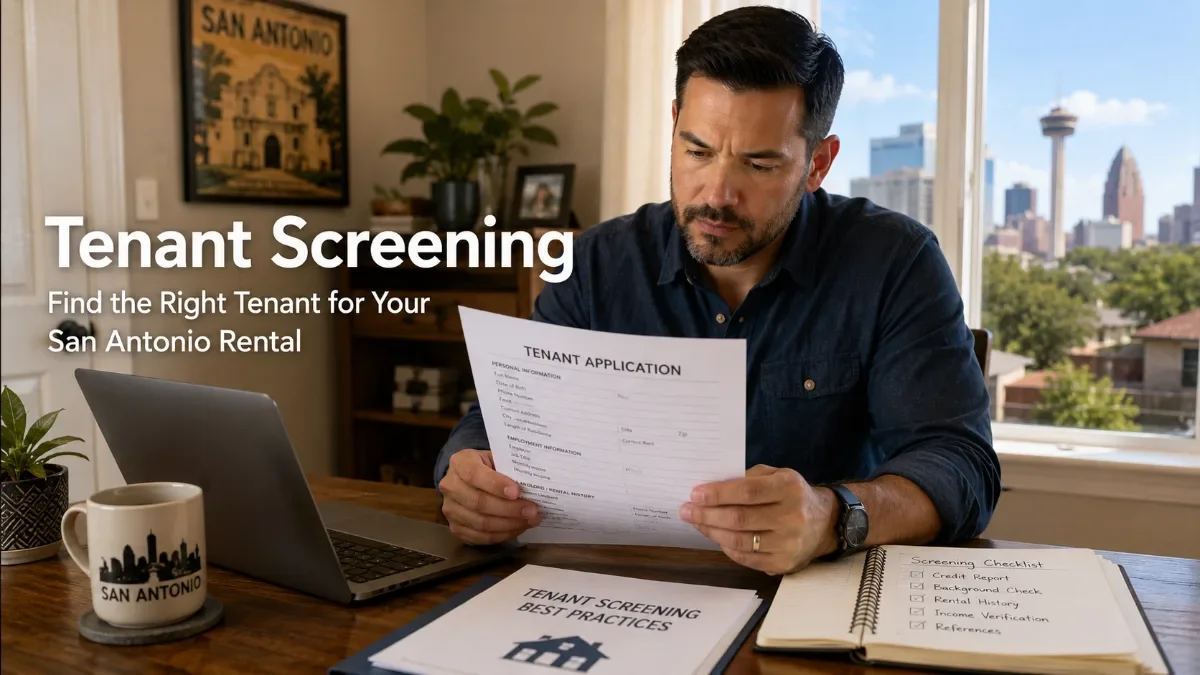
The single most expensive mistake a San Antonio landlord can make isn't a leaky roof or a slow month on the market - it's putting the wrong tenant in the property. A bad placement can mean missed rent, property damage, and a Texas eviction that drags on for weeks. Good tenant screening is the cheapest insurance you'll ever buy against all of it.
This is a step-by-step guide to screening tenants the right way in San Antonio: what to check, in what order, how to read the results, and how to stay on the right side of Fair Housing law while you do it.
This guide is general information for Texas landlords, not legal advice. Screening laws change and mistakes carry real liability - when in doubt, consult a Texas attorney.
Set your screening criteria before you list
The best screening decision you'll make happens before a single applicant applies: writing down your criteria. When your standards are set in advance and applied to everyone identically, you protect yourself two ways - you make faster, better decisions, and you build a Fair Housing defense.
Decide up front on your income requirement (the 3x-rent rule is the San Antonio norm), your minimum credit score, your policy on prior evictions and bankruptcies, your pet policy, and how you'll handle criminal history on an individualized basis. Put it in writing and don't deviate applicant to applicant.
Consistent, written criteria applied to every applicant is your strongest defense if a rejected applicant ever claims discrimination. Judgment calls made case by case are where landlords get into trouble.
Step 1: Use a complete rental application
Everything downstream depends on a thorough application. Collect the applicant's full legal name, date of birth, current and prior addresses, employer and income, and consent to run credit and background checks. In Texas you can charge a reasonable, non-refundable application fee to cover the cost of screening - just disclose it clearly.
A complete application is also your first quiet screen. Blank fields, refusal to consent to a background check, or inconsistencies between what's written and what you can verify are early signals worth a second look.
Step 2: Verify income and employment
Income verification is where most problem tenancies could have been prevented. Ask for recent pay stubs, an offer or employment letter, or bank statements for self-employed applicants, and then actually verify them - a quick call to the employer confirms the job is real and the income is current.
The working benchmark in San Antonio is gross monthly income of at least three times the rent. On a $1,600 unit, that's about $4,800/month. If an applicant is close but not quite there, a larger deposit, a qualified co-signer, or a strong rental history can bridge the gap - just make sure whatever flexibility you offer is a policy you'd extend to any applicant in the same position.
Step 3: Check credit history
A credit report tells you how someone handles their obligations. You're less interested in a single magic number than in the pattern: on-time payment history, current debt load, collections, and any prior landlord debt or utility write-offs.
To pull credit you need the applicant's written consent, and you must comply with the federal Fair Credit Reporting Act. That includes the adverse action step in Step 6 - if you deny, charge more, or require a co-signer because of something in the report, you owe the applicant notice.
Step 4: Run background and eviction checks
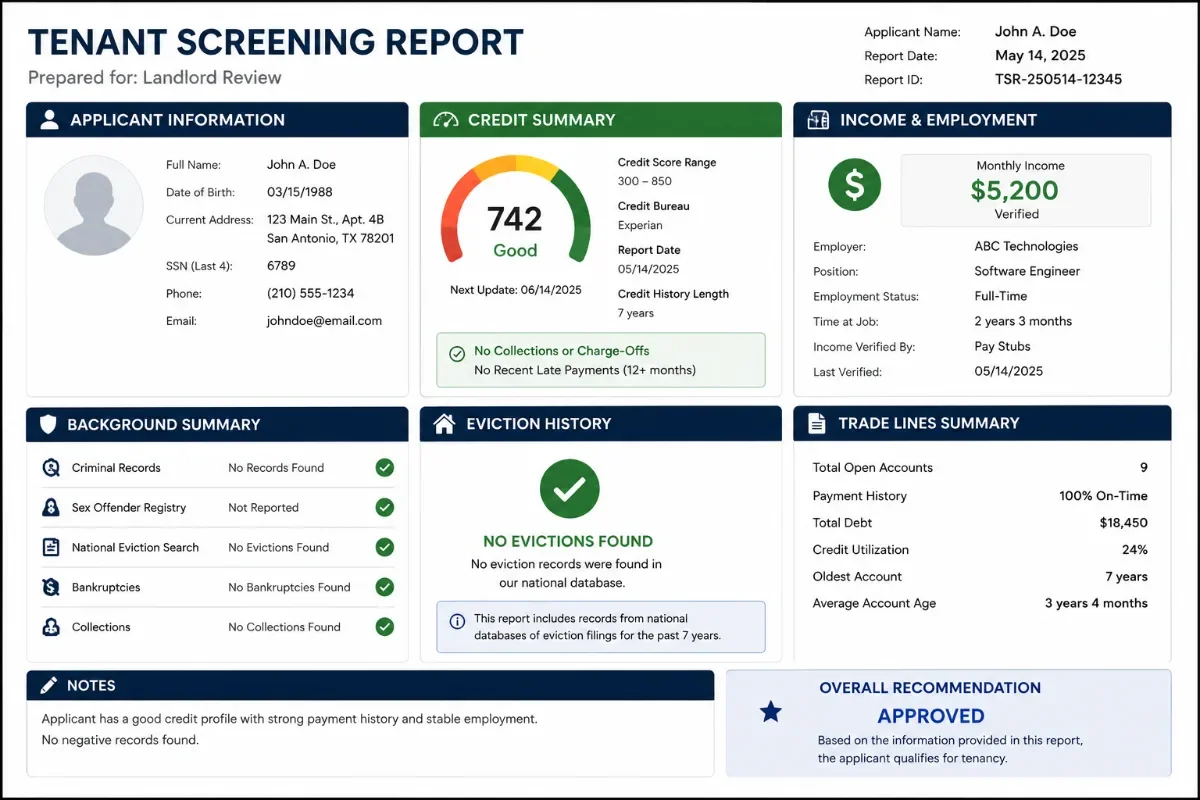
Background screening rounds out the picture with two pieces: a criminal history check and an eviction history search. Eviction records are especially predictive in Texas - a prior eviction in the last few years is one of the strongest signals of future risk.
Handle criminal history carefully. HUD guidance discourages blanket bans on anyone with any record; the compliant approach is an individualized assessment that considers the nature of the offense and how long ago it happened, rather than an automatic no. This is one area where a professional screening service and clear written policy really earn their keep.
Step 5: Call previous landlords and references
A screening report tells you the numbers; a former landlord tells you the story. Call the two most recent prior landlords - not just the current one, who might be motivated to pass a difficult tenant along. Ask the questions that matter: Did they pay on time? Did they give proper notice? Was the property returned in good condition? Would you rent to them again?
Pair this with a solid move-in process. Documenting the property's condition with a thorough walkthrough - like the one in our 2026 rental inspection checklist - protects you at move-out no matter how well the applicant screened.
Step 6: Make a compliant decision - and notify properly
Once you've weighed income, credit, background, and references against your written criteria, make the call. If you approve, move quickly - good applicants have options in San Antonio's competitive market, which our San Antonio rental market report tracks in detail.
If you deny based even partly on a consumer or credit report, federal law requires you to send an adverse action notice telling the applicant, identifying the reporting agency, and explaining their right to a free copy of the report and to dispute it. Skipping this step is a common and avoidable violation.
You may never screen or reject based on race, color, national origin, religion, sex, familial status, or disability. Apply identical criteria to every applicant, document your reasons, and always send the adverse action notice when a report drives a denial.
Should you screen tenants yourself or hire it out?
A DIY landlord can absolutely run good screening - but it takes time, the right tools, and current knowledge of FCRA and Fair Housing rules that shift over time. The risk isn't the effort; it's the liability of one compliance misstep or one gut-feel rejection that looks like discrimination in hindsight.
This is where professional tenant screening services and property managers add real value. A manager applies consistent written criteria, pulls compliant reports, verifies income and history, handles adverse action notices correctly, and does it in a day or two instead of a week. If you're vetting a manager or agent, it's also worth confirming their credentials - here's how to verify a Texas real estate license before you sign anything.
The bottom line
Great tenants aren't luck - they're the product of a consistent, compliant screening process. Set your criteria in writing, verify income, check credit and background, call prior landlords, and document a fair decision every time. Do that and you'll dramatically cut your risk of missed rent, damage, and eviction.
Our team runs thorough, Fair Housing-compliant tenant screening for San Antonio owners - credit, income, background, and references, handled the right way. Contact Hendricks Property Management to protect your investment.
Frequently Asked Questions
What do landlords look for in tenant screening?
Most San Antonio landlords look at four things: verified income (commonly 3x the monthly rent), credit history and score, rental history and references, and a background and eviction check. The goal is a tenant who can afford the rent, pays on time, and treats the property well.
How much should a tenant make to rent in San Antonio?
A common benchmark is gross monthly income of at least three times the rent. On a $1,500 rental, that's about $4,500/month or roughly $54,000/year. Some landlords flex this for strong credit, a co-signer, or extra deposit.
Can a landlord run a background check on a tenant in Texas?
Yes. Texas landlords can run credit, criminal, and eviction checks - but you must have the applicant's consent and follow the federal Fair Credit Reporting Act and Fair Housing Act, including sending an adverse action notice if you deny someone based on a report.
What can't a landlord ask during tenant screening?
Under the Fair Housing Act, you cannot screen or reject based on race, color, national origin, religion, sex, familial status, or disability. Apply the same written criteria to every applicant to stay compliant.
How long does tenant screening take?
With a complete application and a good screening service, most San Antonio landlords can screen an applicant in 1-3 business days. Delays usually come from slow employer or prior-landlord verifications.