
Move-Out Cleaning Checklist for Texas Renters (Get Your Full Deposit Back)
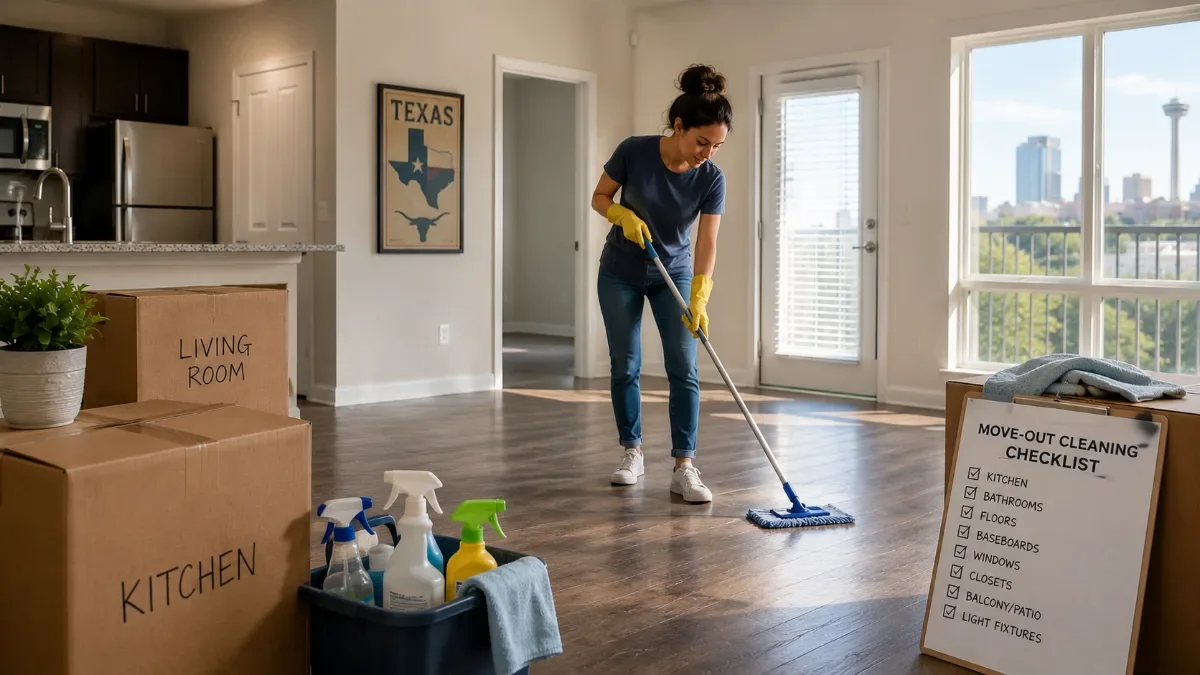
Moving out is stressful enough without losing part of your security deposit over a dirty oven or a missed cleaning step. The good news: in Texas, getting your full deposit back is largely within your control. It comes down to a thorough move-out cleaning, knowing what your landlord can (and can't) deduct, and understanding the 30-day rule.
Use the room-by-room move-out cleaning checklist below, follow the deposit rules, and you'll hand back your keys with confidence.
This article is general information current as of July 2026 and is not legal advice. Security-deposit disputes turn on the facts and your lease. For your specific situation, consult a licensed Texas attorney or a legal-aid provider.
First, know your rights: the Texas 30-day rule
Texas law is clear and renter-friendly on deposits. Under Texas Property Code 92.103, your landlord must return your security deposit - or give you an itemized list of deductions - no later than 30 days after you surrender the property. Two things you must do to start that clock and protect yourself:
- Surrender the property (move out and return the keys).
- Provide a forwarding address in writing.
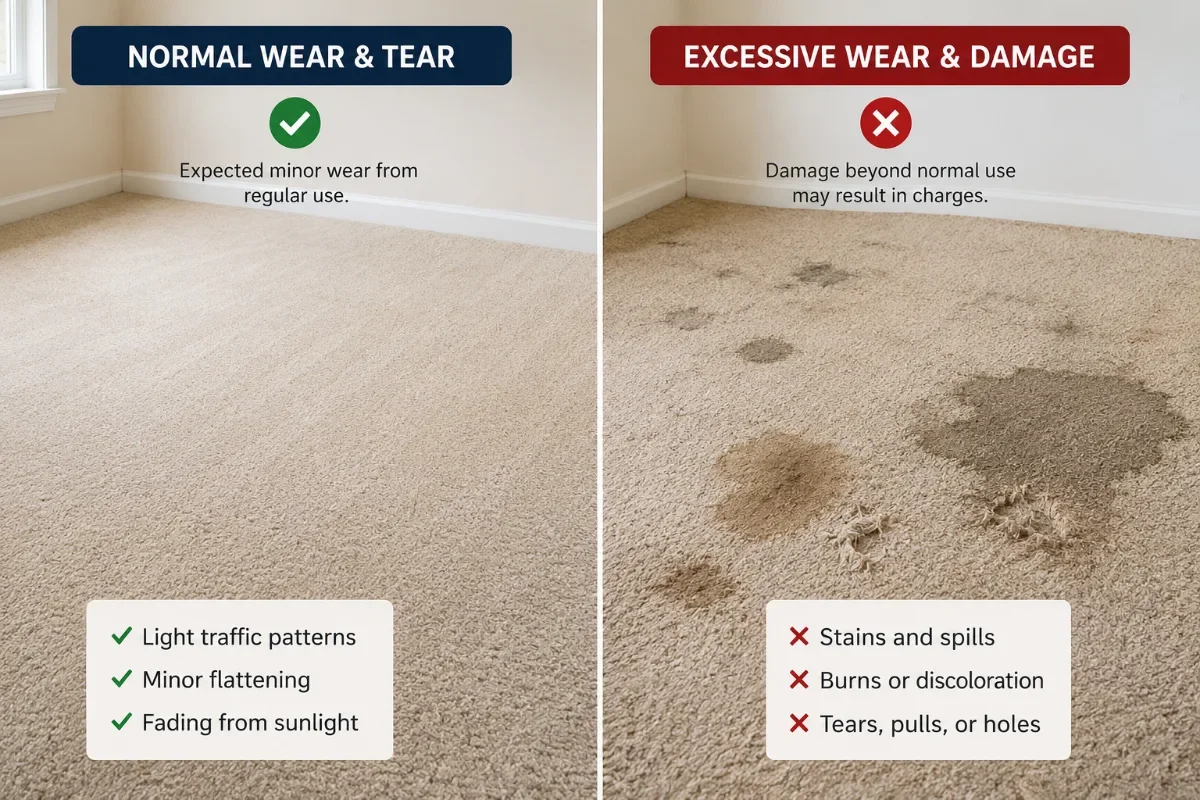
And under Property Code 92.104, a landlord cannot deduct for normal wear and tear - only for actual damage and unpaid amounts the lease allows.
If a landlord wrongfully keeps your deposit in bad faith, Texas Property Code 92.109 lets you recover three times the wrongfully withheld amount, plus $100 and reasonable attorney's fees. Texas law strongly favors returning deposits.
Normal wear and tear vs. damage
This is where most deposit disputes happen, so be clear on the line:
- Normal wear and tear (not deductible): faded or lightly scuffed paint, minor carpet wear in walkways, small nail holes, loose grout from age, gently worn fixtures.
- Damage (deductible): large or numerous holes, pet stains and odors, burns, broken tiles or fixtures, missing blinds, unapproved paint colors, and excessive filth requiring professional cleaning.
When in doubt, repair it or clean it. The goal is to return the unit in the same condition it was in when you moved in - minus ordinary aging.
The room-by-room move-out cleaning checklist
Work top to bottom and back to front in each room so you don't re-dirty cleaned surfaces. Print this and check off as you go.
Kitchen
- Clean inside and outside of the oven, stovetop, and range hood
- Empty, defrost, and wipe the refrigerator and freezer
- Clean inside the microwave and dishwasher
- Wipe all cabinets inside and out, and clear crumbs from drawers
- Scrub the sink and faucet; clear the drain
- Wipe down countertops and backsplash
- Sweep and mop the floor
Bathrooms
- Scrub the toilet, tub, and shower (including grout and glass)
- Clean the sink, faucet, and vanity inside and out
- Wipe mirrors and any cabinet fronts
- Clear hair from drains; check for clogs
- Remove soap scum and mildew
- Sweep and mop the floor; empty and wipe trash areas
Bedrooms and living areas
- Dust ceiling fans, light fixtures, vents, and baseboards
- Wipe down doors, frames, switch plates, and outlet covers
- Clean windows, sills, tracks, and any blinds
- Fill small nail holes if your lease requires it
- Vacuum carpets thoroughly (consider professional cleaning if pets lived there)
- Sweep and mop hard floors
Whole-home and exterior
- Replace burned-out light bulbs
- Remove all nails, screws, etc. If you do paint touch up, ensure the paint matches. Touch up paint must match color and finish. You can take a small sample to any paint or hardware store and have them match it.
- Walls with larger holes need to be spackled and painted. If you spackle, you must paint with matching paint in color and finish
- Replace HVAC filters
- Test smoke and carbon-monoxide detectors
- Remove all trash and personal belongings
- Sweep patios, balconies, and the garage
- Mow/tidy the yard if you were responsible for it
- Return all keys, remotes, and access devices
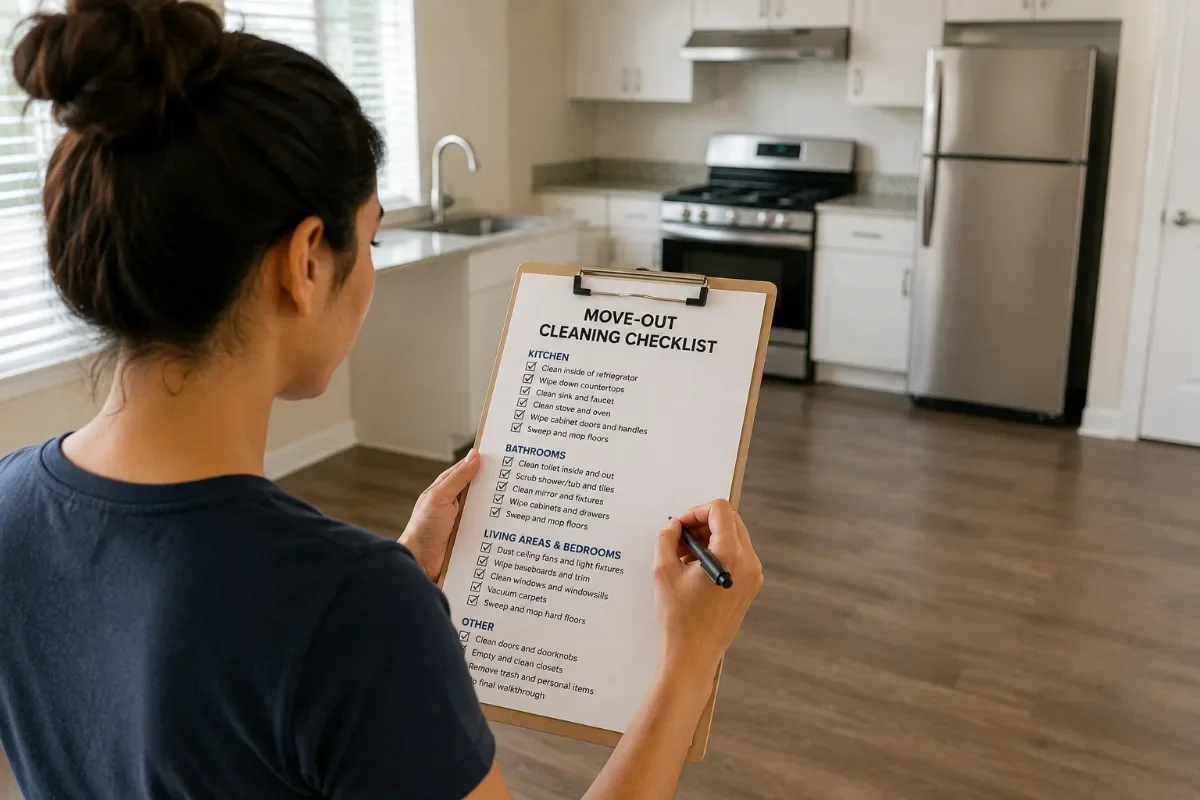
Want this as a one-page printable to carry room to room? Download our printable move-out cleaning checklist and tick off each item as you finish.
Common mistakes that cost renters their deposit
Even careful renters lose deposit money to a handful of avoidable errors. Watch for these:
- Skipping the forwarding address. Without a written forwarding address, you can delay your refund and weaken your position. Provide it in writing when you give notice or return keys.
- Leaving the carpets dirty after pets. Pet odors and stains are a classic deduction. If pets lived in the unit, professional carpet cleaning is usually money well spent - and keep the receipt.
- Forgetting the "hidden" spots. Inside the oven, behind the fridge, the range hood filter, baseboards, blinds, and light fixtures are the areas inspectors check first and renters skip most.
- Patching holes with the wrong materials. Filling nail holes is fine, but sloppy patches or wrong-color touch-up paint can look worse than the original holes. Check what your lease requires.
- Leaving belongings or trash behind. Anything left in the unit - even a couch you "donated" by abandoning it - can become a haul-away charge.
- Not returning every key and remote. Missing keys, garage remotes, mailbox keys, or fobs frequently trigger replacement fees.
A little extra attention to these high-risk items protects the bulk of your deposit.
Document everything (your best protection)
Cleaning is only half the battle - proof is the other half. Before you hand over the keys:
- Take date-stamped photos and video of every room, empty and clean.
- Compare against your move-in condition report if you completed one.
- Keep a copy of your written notice and forwarding address.
- Get written confirmation of the date you returned the keys.
If a deduction later seems unfair, this documentation is what wins the dispute. Our 2026 rental inspection checklist is a helpful companion for documenting condition the right way.
Before you go: follow your community's move-out steps
Every property has its own turnover process. Review our move-out instructions and the rental policies and procedures in your lease so nothing is missed - and check our broader renter resources in San Antonio for more guidance.
Follow your move-out instructions, use the checklist above, and reach out to our team with any questions. We want to return your full deposit - help us help you.
Do the cleaning, know the rules, and document the condition, and the Texas 30-day rule works in your favor. A few focused hours now is the cheapest way to protect hundreds of dollars in deposit money. For the legal details, you can read Texas Property Code Chapter 92 and the Texas State Law Library's deposit refund guide.
Frequently Asked Questions
How long does a landlord have to return a security deposit in Texas?
Under Texas Property Code 92.103, a landlord must return your deposit (or an itemized list of deductions) no later than 30 days after you surrender the property and provide a forwarding address.
What is the difference between normal wear and tear and damage in Texas?
Normal wear and tear is deterioration from ordinary, intended use - faded paint, minor carpet wear, small nail holes. A landlord can't deduct for it. Damage comes from negligence, accident, or abuse - large holes, stains, or broken fixtures - and can be deducted.
How do I get my full security deposit back in Texas?
Give proper written notice, provide a forwarding address, clean the unit thoroughly room by room, repair tenant-caused damage, document the condition with date-stamped photos, and return all keys. Then the landlord has 30 days to refund or itemize.
Can a landlord keep my deposit for normal wear and tear in Texas?
No. Texas Property Code 92.104 prohibits deducting for normal wear and tear. If a landlord wrongfully withholds your deposit in bad faith, you may be entitled to three times the amount wrongfully withheld plus $100 and attorney's fees (92.109).
Do I have to give a forwarding address to get my deposit back?
Yes - it's important. The landlord's duty to refund or itemize within 30 days is tied to you providing a forwarding address in writing. Without it, you can make recovery harder for yourself.
Thank you!
We got your information and someone from our team will reach out shortly.