
Best Time to Rent in San Antonio: Timing a Lease Around the City's Slow Winter Leasing Season (2026)
Why Timing Actually Matters When You Rent in San Antonio
Most renters pick a move-in date based on when their current lease ends or when a job starts, not based on the calendar. That is understandable, but it leaves money and negotiating leverage on the table. San Antonio's rental market, like most mid-size Sun Belt metros, runs on a seasonal rhythm tied to the school calendar, military relocation cycles out of Joint Base San Antonio, and summer heat that makes moving less appealing for everyone except the people who have no choice.
Understanding that rhythm lets you do one simple thing: choose a lease term so your renewal or move-out date lands in a season that works in your favor, rather than one that forces you to compete with half the city for the same handful of listings.
If you can control your move date at all, aim to start a new lease, or structure your lease length so it ends, during the late fall or winter months rather than the peak of summer.
San Antonio's Rental Market Seasonality, Explained
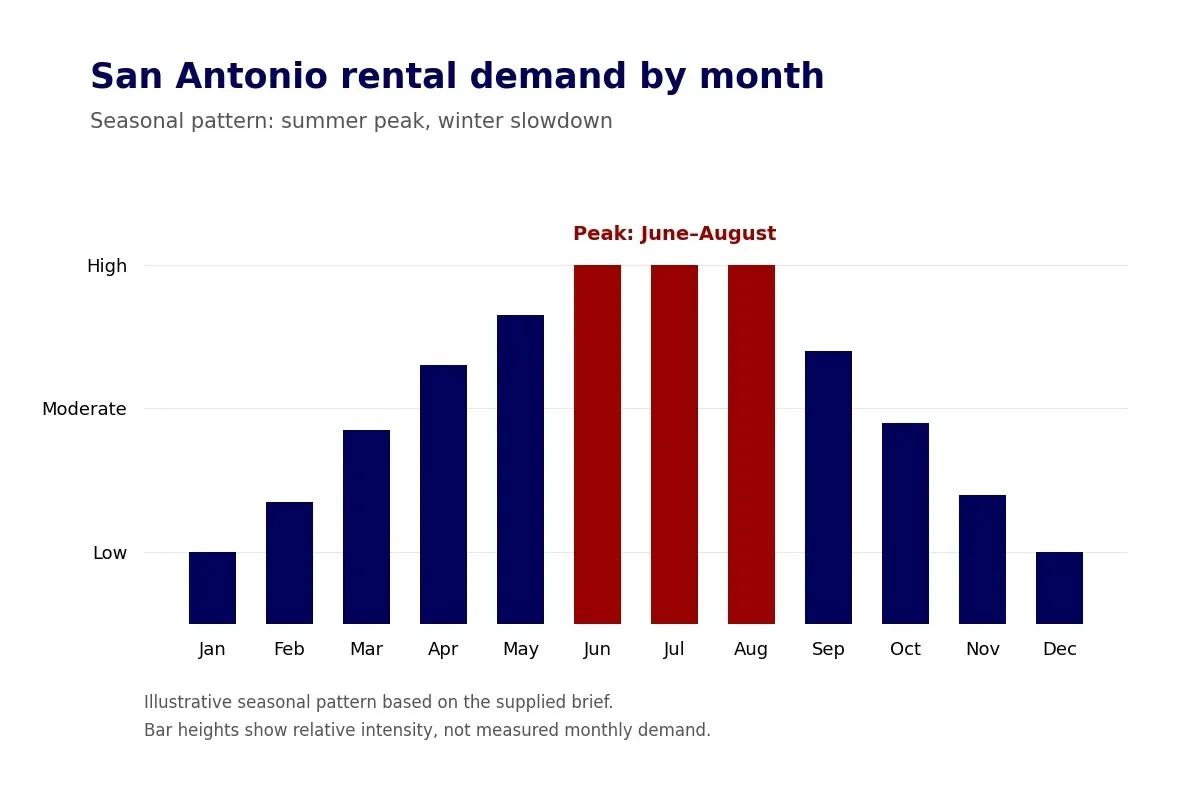
San Antonio does not have the dramatic seasonal swings of a snowbelt city, but local leasing activity still rises and falls in a fairly predictable pattern each year.
Spring (March through May): Activity starts to pick up as families begin planning summer moves and lease terms signed the previous spring start expiring. Inventory is moderate and competition is beginning to build.
Summer (June through August): This is San Antonio's peak leasing season. Families move so kids can start the new school year without disrupting the semester, and a large share of military households tied to Joint Base San Antonio-Lackland, Fort Sam Houston, and Randolph relocate on Permanent Change of Station orders that are timed to summer. Demand is highest, selection moves fastest, and asking rents are typically at their yearly high. Some national and local market write-ups on seasonal rent trend research point to the same pattern across most U.S. metros, and San Antonio tracks it closely.
Fall (September through November): Demand cools gradually as the school-year moves wrap up. This is often a reasonable middle-ground window, with more selection than winter and less competition than summer.
Winter (December through February): This is San Antonio's slow season. Fewer people want to move around the holidays, schools are mid-semester, and PCS orders are less common in the dead of winter. Listings sit on the market longer, which shifts leverage toward the renter. Local commentary on reasons renting in winter makes sense in San Antonio echoes what property managers see every year: less competition, more room to negotiate, and faster responses from leasing staff who have fewer applications to sort through.
During the slow season, a well-qualified applicant is often the one asking for concessions, not the other way around. If you are flexible on your move date and can search in December or January, use that leverage to ask about a reduced deposit, a prorated first month, or a locked-in renewal rate.
How to Time a Lease So It Does Not End in the Slow Season
Here is the part most renters overlook: the season you sign in is not the season your lease ends in, and the end date is the one that matters most for your next move.
A 12-month lease signed in June ends the following June, right in the middle of peak season, which means you will be competing with the most applicants and seeing the highest prices if you need to find a new place. A 12-month lease signed in October also ends in October, a much calmer month to be searching.
If your target move-in date lands you in a bad spot, consider these adjustments:
- Ask for a lease term other than exactly 12 months. Many San Antonio property managers, including full-service firms like SA Rents, will offer 9-month, 15-month, or other non-standard terms, sometimes with a small monthly premium, specifically to help a lease's end date land in a lower-demand month.
- Negotiate your renewal date, not just your rent, when you renew. If your current lease is about to roll over into a summer expiration, ask your property manager whether shifting the renewal to a winter or early-spring end date is possible.
- Avoid letting a lease lapse into month-to-month during peak season if you plan to move soon after, since month-to-month rates are typically higher and you lose the predictability of a fixed term.
Texas does not set a single statewide notice period for ending a fixed-term lease. That number lives in your individual lease agreement, and Texas Property Code Chapter 92 governs the broader rights and duties between landlords and tenants without dictating one universal notice window. Read your lease's renewal and termination clauses before you build a moving plan around a specific date.
What This Means If You Need to Move Mid-Lease
Sometimes timing is not optional. A job relocation, a family change, or a housing situation that is no longer workable can force a move regardless of season. If you are considering ending a lease early, it is worth understanding your options and the financial exposure involved before you sign anything new. Our guide on breaking a lease in Texas walks through the legal grounds for early termination, how landlords typically handle re-renting obligations, and what costs you may still owe.
If your circumstances allow it, even shifting a planned move by six to eight weeks, from the start of summer to late spring or from midsummer into early fall, can meaningfully change how much competition you face and how much negotiating room you have.
A Practical Timeline for San Antonio Renters
If you are planning ahead rather than reacting to a forced move, here is a simple way to think about the calendar:
- 60 to 90 days before your ideal move date: Start browsing listings to get a feel for current pricing in your target neighborhoods, even if you are not ready to apply.
- 30 to 45 days before: Begin actively applying. San Antonio's rental market moves fast in peak months, so well-priced, well-located units in June and July can go within days.
- At renewal time: If your current lease expiration falls in May, June, or July, ask your landlord or property manager about adjusting the term length so your next renewal lands in a slower month instead.
- If you have full flexibility: Target a move-in during December, January, or February to get the most leverage on price and concessions, understanding that you will see fewer total listings to choose from.
A professional management company that handles many units across San Antonio has visibility into which properties are coming available in which months, something an individual landlord rarely offers. That makes it easier to line up a lease term that fits both your schedule and the slow season strategy described above.
Landlords and Owners: The Same Seasonality Works in Reverse
If you own a rental property in San Antonio, this same seasonal pattern should inform when you list a vacancy and what lease term you offer a new tenant. Listing a unit in June or July, when renter demand is at its peak, typically means a shorter vacancy period and stronger applicant pools. Listing in December, by contrast, often means a longer time on market and more pressure to offer concessions just to fill the unit.
The practical takeaway for owners is similar to the one for renters, just flipped: try to structure lease terms so turnover dates land in spring or summer rather than the dead of winter, even if that means offering an incoming tenant a slightly shorter or longer first term than a standard 12 months. San Antonio property management professionals build this kind of staggered-term planning into how they handle renewals across a whole portfolio, which is one of the advantages of working with a management company rather than self-managing a single unit.
Disclaimer
This article provides general information about seasonal rental market patterns and lease timing in San Antonio and is not legal advice. Lease terms, notice periods, and renewal rights vary by individual contract, and Texas landlord-tenant law can change. Confirm the specifics of your situation with your property manager or a licensed Texas attorney before making decisions based on this content.
Whether you are a renter trying to land a move-in date that works in your favor or an owner trying to minimize vacancy during the slow season, SA Rents' San Antonio property management team can help you plan a lease term that fits the calendar, not just the calendar year. Reach out to talk through your timeline.
Frequently Asked Questions
What is the actual best time to rent in San Antonio?
For most renters, late November through February is the strongest window for negotiating leverage because fewer households move during the holidays and winter weather, so landlords and property managers compete harder for qualified applicants. You will generally see fewer unit choices than in peak summer, but more flexibility on rent, move-in dates, and concessions like a reduced deposit or a free week of rent.
Why is summer the most expensive time to rent in San Antonio?
Summer, roughly May through August, is when families with school-age kids prefer to move so they are settled before the new school year, and when military families at Joint Base San Antonio rotate under PCS orders. That overlap concentrates demand into a few months, which pushes asking rents up and shrinks the negotiating room renters have.
Should I ever sign a lease that ends in December or January?
Only if you are comfortable potentially searching for your next place during the slow season, which can actually work in your favor as a renter since inventory sits longer and landlords are more willing to negotiate. The bigger risk is for the person re-listing that unit, not the tenant moving out, so from a pure renter's perspective a winter lease end date is not something to avoid.
How much notice should I give before my lease ends in San Antonio?
Most Texas leases require 30 to 60 days' written notice of non-renewal or intent to vacate, but the exact number is set by your specific lease agreement, not by state law, so check your document first. Texas Property Code Chapter 92 governs the broader landlord-tenant relationship, but notice periods for ending a fixed-term lease are a contract term you and your landlord agreed to at move-in.
Does timing a lease around the slow season actually save renters money?
It can, because property managers facing winter vacancy are often willing to shave a little off the asking rent, waive an admin fee, or extend a move-in date to fill a unit faster, whereas in June or July they can often get full price from multiple applicants. The savings are usually modest rather than dramatic, typically showing up as reduced fees or added flexibility rather than a large cut to the base rent.
Is it harder to find a good rental in San Antonio during winter?
Selection is thinner in December and January simply because fewer people move and fewer units turn over, so if you need a specific floor plan, school zone, or neighborhood, you may have fewer options to choose from. If your priorities are flexible, winter is still a reasonable time to search because the units that are available tend to see less competition from other applicants.
