
Does a San Antonio Landlord Have to Provide Air Conditioning? Texas Summer Heat Rules (2026)
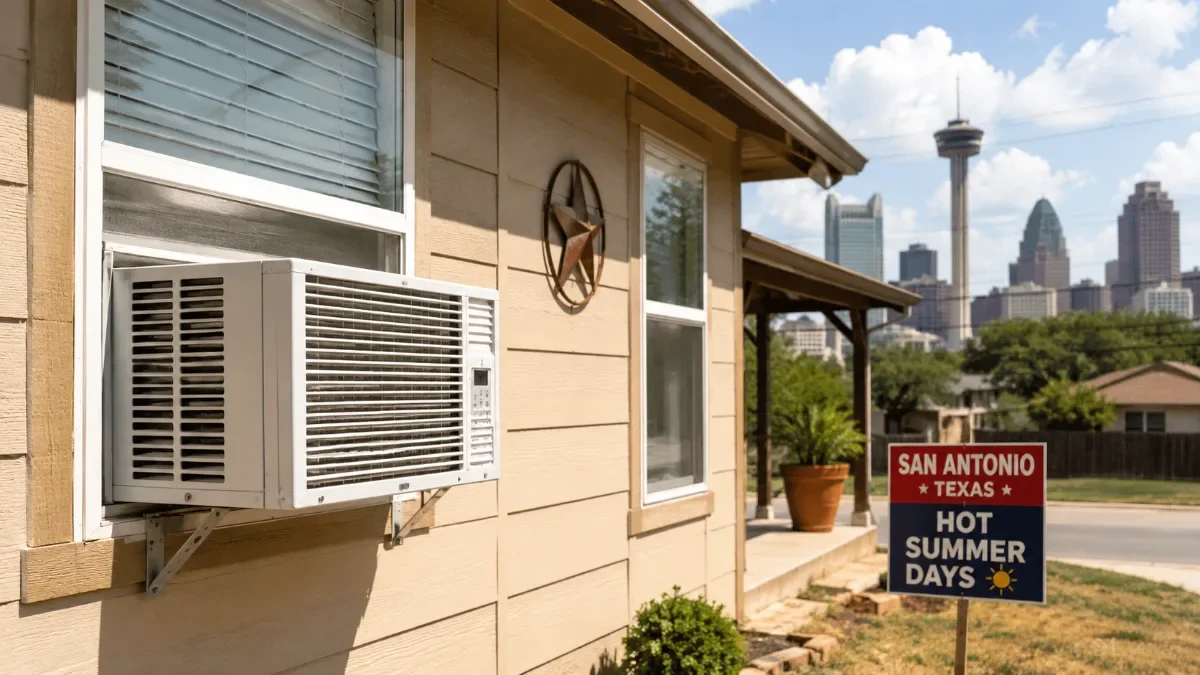
San Antonio summers are not subtle. Triple-digit afternoons stack up for weeks at a stretch, and a rental without working air conditioning goes from uncomfortable to genuinely dangerous fast. So when the AC quits in July, every tenant asks the same question: does my landlord actually have to fix it - or provide it at all?
The honest answer has two parts, and Texas law treats them differently. This guide breaks down what the law requires, how fast a landlord has to act, what remedies you have as a tenant, and how to protect yourself before the next heat wave hits.
This article is general information for San Antonio renters and owners, not legal advice. For a specific situation, talk to a Texas attorney or a tenant-rights resource.
Does Texas law require landlords to provide air conditioning?
Here's the surprising part: Texas does not have a statewide law that forces a landlord to install air conditioning in a rental. There is no line in the Texas Property Code that says every home must come with AC. In that narrow sense, a landlord is not automatically required to provide cooling.
But that is rarely where the story ends. Almost every rental in San Antonio is leased with air conditioning already in place, and that changes the analysis completely. Once AC is part of the property - advertised in the listing, shown during the walkthrough, or written into the lease - the landlord generally has to keep it working. A promised amenity becomes a repair obligation.
So the practical rule most San Antonio tenants live under is: your landlord may not have been required to add AC, but if your unit came with it, they are responsible for maintaining and repairing it.
Before you do anything else, read your lease. Look for any clause about air conditioning, cooling, or HVAC maintenance. If AC is listed as an included amenity, you have a much stronger footing to demand a repair.
What the Texas Property Code says about repairs
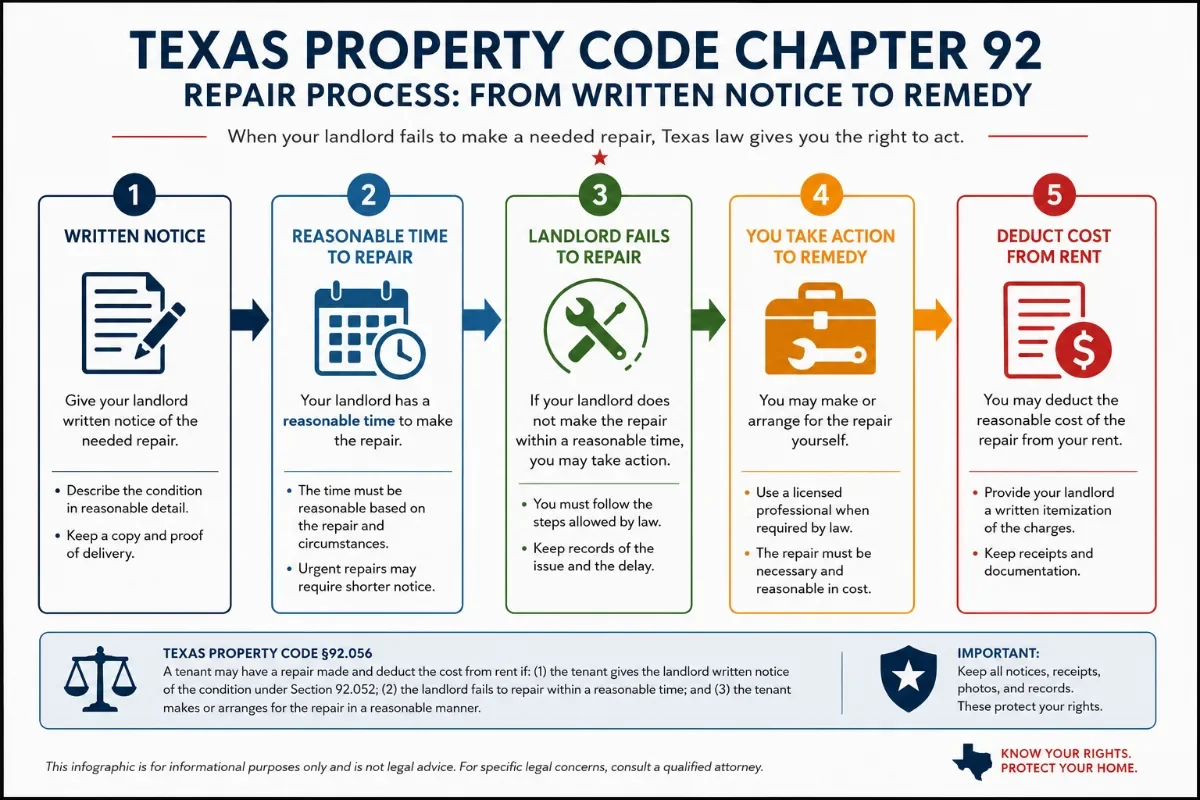
The backbone of tenant repair rights in Texas is Texas Property Code Chapter 92. It requires landlords to make a diligent effort to repair or remedy a condition that "materially affects the physical health or safety of an ordinary tenant" - once the tenant gives proper notice and is not behind on rent.
A failed cooling system in a San Antonio summer can absolutely rise to that level. When indoor temperatures climb into the 90s and stay there, the risk of heat illness is real - especially for infants, elderly tenants, and anyone with a heart or respiratory condition. In those conditions, a broken AC is not a minor inconvenience; it is a health-and-safety condition that triggers the landlord's duty to act.
The Code lays out the process the tenant has to follow to unlock remedies, and it matters that you follow it in order.
How fast does a landlord have to fix the AC?
Texas law does not print a single hard deadline for every repair. Instead it requires a landlord to act within a "reasonable time" after receiving proper notice. What counts as reasonable slides with the severity of the problem.
For most repairs, the law presumes seven days is reasonable. But that presumption can shrink dramatically when the condition is dangerous. A broken AC during a San Antonio heat wave is far more urgent than a dripping faucet, and a court can find that "reasonable" means a day or two - not a week - when tenants are exposed to extreme indoor heat.
Two things speed the clock up: the danger level of the condition, and clear, dated written notice from you. Two things slow it down or reset it: informal verbal complaints that leave no record, and being behind on rent, which can suspend your remedies entirely.
Your remedies as a tenant when the AC stays broken
If you gave proper written notice and your landlord still fails to make a diligent effort to fix the AC within a reasonable time, Chapter 92 gives you options. In general terms, tenants may be able to:
- Repair and deduct. Under specific conditions and dollar limits, arrange the repair yourself and subtract the cost from rent - but only after following the statutory notice steps exactly.
- Terminate the lease. End the lease and move out if the condition is serious and the landlord won't act.
- Seek a court remedy. Ask a court to order the repair, reduce your rent for the affected period, and in some cases award damages and a civil penalty.
What you cannot do is simply stop paying rent. Rent withholding is not a recognized remedy in Texas and is one of the fastest ways to end up facing eviction. The statute is specific, and the safe path is to follow it step by step rather than improvise.
Withholding rent to force a repair is not legal in Texas and can get you evicted. Use the written-notice process instead, and keep every receipt and message.
How to document a broken-AC complaint the right way
Whether you are a tenant protecting your rights or an owner protecting your property, documentation decides these disputes. The tenant who kept dated records almost always ends up in the stronger position.
If your AC fails, do this:
- Send written notice immediately. Email or a dated letter to your landlord or property manager. Describe the problem, the date it started, and the indoor temperature if you can measure it.
- Keep copies of everything. Save the notice, any replies, and a running log of dates and calls.
- Photograph the conditions. A thermostat reading of 89 degrees at 6 p.m. is powerful evidence.
- Stay current on rent. Your remedies under Chapter 92 depend on it.
- Give reasonable access. The landlord can't fix what they can't reach - coordinate entry for the technician.
A thorough move-in walkthrough helps here too. If you noted the AC's condition when you took the keys - the way our 2026 rental inspection checklist recommends - you have a clean baseline showing the system worked when the lease began.
What this means for San Antonio landlords
If you own rental property in San Antonio, the takeaway is straightforward: functioning air conditioning is not optional in this climate. Even where the law didn't force you to install AC, once it's part of the home you're on the hook to keep it running, and slow summer repairs are a fast way to end up in a Chapter 92 dispute.
The smart move is prevention. Service HVAC systems before summer, respond to cooling complaints as emergencies rather than routine tickets, and keep a vetted technician on call from May through September. Cooling demand tracks the local rental cycle too - our San Antonio rental market report shows just how tight turnover season gets right as the heat peaks.
A good property manager handles all of this quietly in the background: preventive maintenance, 24/7 emergency response, and documentation that keeps everyone protected. That's exactly the kind of headache SA Rents takes off an owner's plate.
The bottom line
Texas doesn't force a landlord to install air conditioning - but if your San Antonio rental came with AC, your landlord almost certainly has to keep it working. When it fails in the summer heat, that repair duty can become urgent fast. Give prompt written notice, stay current on rent, document everything, and follow the Texas Property Code process rather than taking matters into your own hands.
SA Rents handles preventive HVAC maintenance, 24/7 emergency response, and tenant communication so your AC problems never become legal ones. Reach out for a free management consultation.
Frequently Asked Questions
Does a landlord in Texas legally have to provide air conditioning?
Texas law does not specifically require a landlord to install air conditioning. However, if the unit was advertised or leased with AC, the landlord generally must keep that AC in working order under the repair duties in Texas Property Code Chapter 92.
How long does a San Antonio landlord have to fix a broken AC?
Texas law requires landlords to make a diligent effort to repair a condition that materially affects health or safety within a reasonable time after proper written notice - often understood as around 7 days, and faster in extreme heat. What counts as reasonable depends on the severity and the risk to the tenant.
Can I withhold rent if my AC breaks in Texas?
No. Withholding rent is not a legal remedy in Texas and can lead to eviction. Instead, follow the statutory notice-and-remedy process, which may include repair-and-deduct or ending the lease if the landlord fails to act.
Is a broken AC in a Texas summer a health and safety issue?
It can be. When indoor heat becomes dangerous - especially for children, seniors, or people with medical conditions - a failed cooling system can qualify as a condition that materially affects health or safety, which triggers the landlord's repair duty.
What should I do first if my rental's AC stops working?
Give your landlord or property manager written notice right away - email or a dated letter - describing the problem. Keep a copy. Written notice is what starts the legal repair clock under Texas law.
