
How to Spot a Rental Scam in San Antonio Before You Wire a Deposit (2026)
Rental Scams Are a Real and Growing Problem, Not a Rare Exception
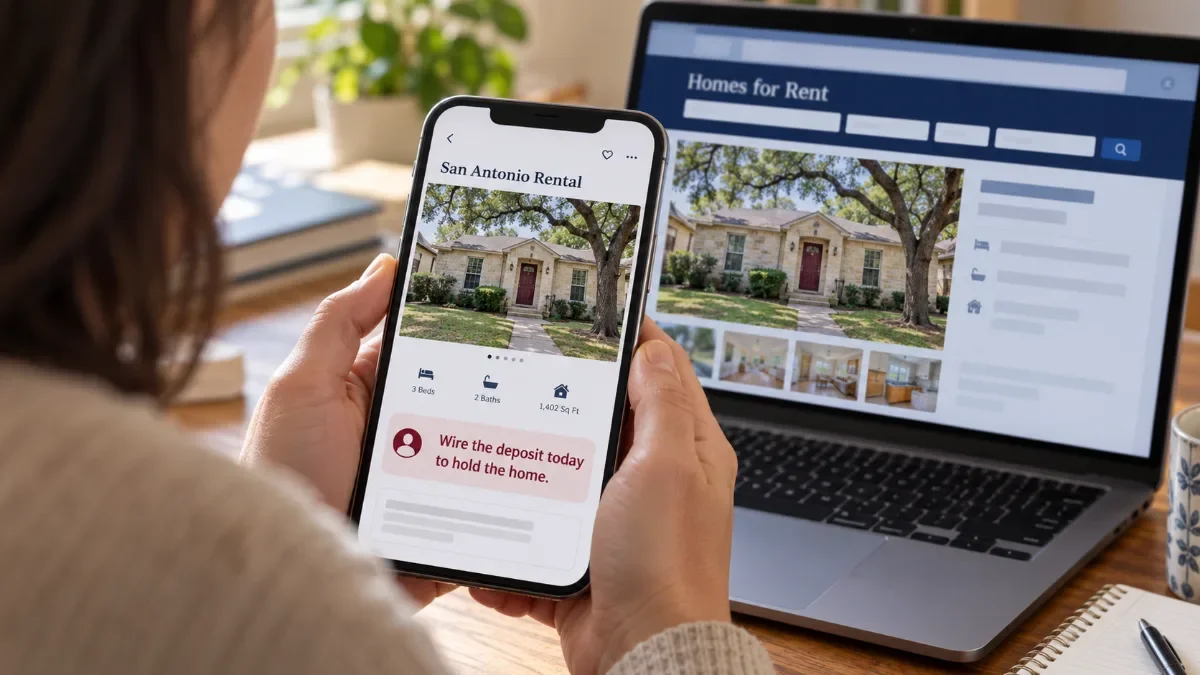
Searching for a place to rent in San Antonio means spending time on listing sites, and unfortunately, those same sites are where rental scammers concentrate their efforts. The FBI's Internet Crime Complaint Center has tracked rental and real estate fraud as a persistent category of reported internet crime for years, and the pattern is consistent nationwide: a scammer copies a legitimate listing, posts it somewhere cheap or free to advertise, and asks a hopeful renter to send money before ever meeting in person.
The good news is that rental scams tend to follow recognizable patterns. Once you know what to look for, most of them are easy to spot before you lose any money.
Never send a deposit, application fee, or any rent payment by wire transfer, cryptocurrency, gift card, or a peer-to-peer payment app to someone you have not met in person or verified independently. This one rule prevents the vast majority of successful rental scams.
The Most Common Rental Scam Patterns in San Antonio
1. The Hijacked or Cloned Listing
A scammer finds a real property, either one that is genuinely for rent, for sale, or not even on the market at all, copies the photos and address, and reposts it somewhere like Craigslist or Facebook Marketplace at a price noticeably lower than similar units nearby. Because the photos and address are real, the listing can look completely legitimate at first glance.
2. The Absentee Landlord Story
The "landlord" claims to be out of the country, deployed, working a missionary assignment, or otherwise unable to show the property in person, and offers to mail a key or provide a lockbox code after a deposit is received. This story exists for one reason: to explain away the fact that you cannot meet them or tour the unit before paying.
3. The Urgency Push
Scammers frequently claim there are multiple other interested renters and that the unit will be gone within hours unless you act now. Real property managers handling legitimate demand rarely need to manufacture that kind of pressure, since they can simply schedule the next qualified applicant.
4. The Application Fee Mill
A listing that does not exist, or exists but is not actually for rent, collects application fees, Social Security numbers, and other personal information from dozens of hopeful renters who never hear back. This version is less about the deposit and more about harvesting personal information or a small, repeatable fee from a large volume of applicants.
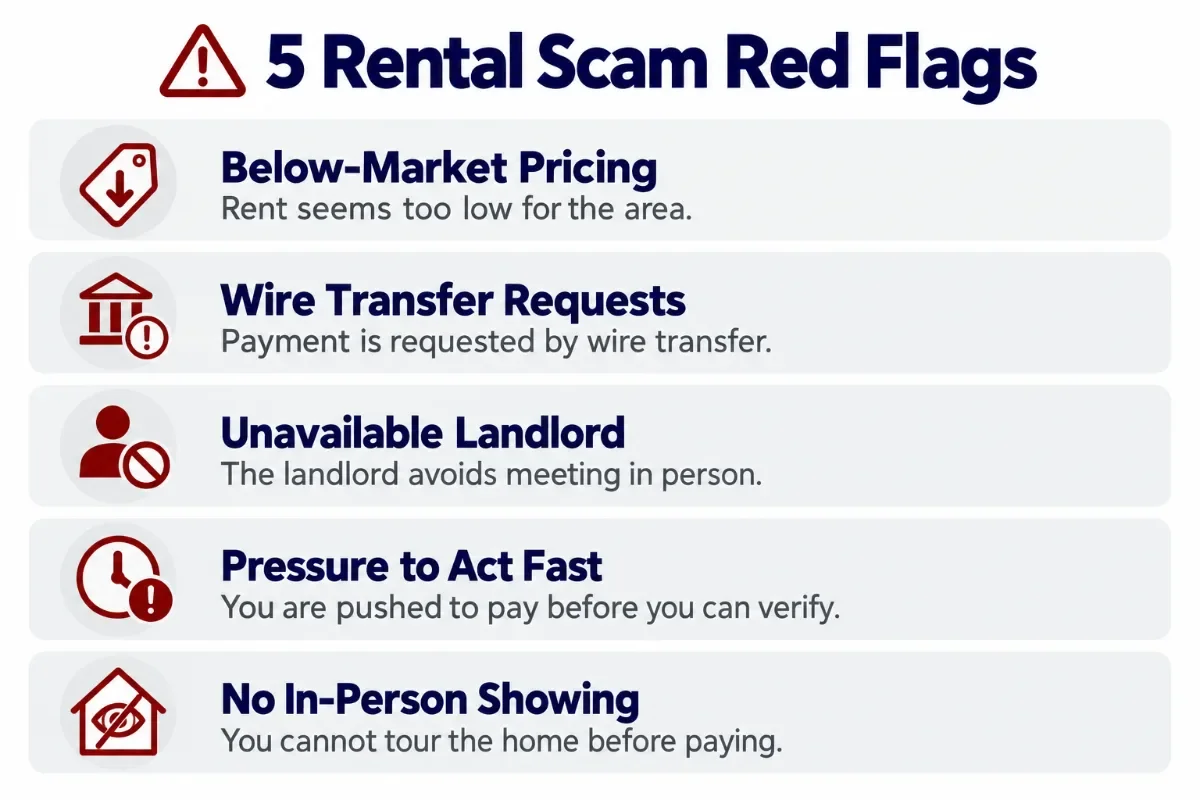
If a listing is priced well below every comparable unit in the same San Antonio neighborhood, treat that as a signal to verify everything else twice before proceeding, not as a lucky find. Apartment List's rental scam red flags research consistently identifies below-market pricing as one of the strongest indicators across thousands of reported scam listings.
Red Flags That Should Make You Stop and Verify
Watch for any combination of the following in a listing or in your communication with the person on the other end:
- The price is noticeably below comparable units in the same area or building.
- You are asked to pay by wire transfer, cryptocurrency, gift card, or a payment app before ever touring the unit.
- The landlord or agent cannot meet in person or show the unit, and offers an excuse rather than an alternative showing option.
- You are pressured to decide or pay within hours, with claims of other interested renters.
- The listing photos appear identical to another listing, another city, or a real estate sale listing rather than a rental.
- The contact person's email address does not match the name on the listing, or communication happens only through text with no phone or video call available.
- You are asked for a Social Security number, bank account number, or payment before any lease or application paperwork has been reviewed.
How to Verify a Listing Before You Pay Anything
- Reverse-search the listing photos. If the same images show up attached to a different address, a different city, or a real estate sale listing, that is a strong sign the rental listing is fake.
- Confirm ownership or management independently. Look up the property address through the county appraisal district or search for the address alongside the name of a known local property management company to see who actually manages it.
- Insist on an in-person or live video tour. A legitimate landlord or property manager showing a real, available unit has no reason to refuse a live walkthrough, whether in person or over video call.
- Call, don't just text or email. Scammers often avoid live phone conversations. A quick call to a verified number for the property management company, found independently rather than from the listing itself, is one of the fastest ways to confirm legitimacy.
- Ask for a formal lease and application before paying anything. Legitimate rentals involve paperwork. A request for money before any application or lease document exists is a serious warning sign.
- Search the address plus the word "scam." If other renters have already flagged the same listing or address, it often surfaces quickly in a simple search.
Working with an established San Antonio property management company gives you a real office, verifiable staff, and a business history you can check, which is much harder for a scammer to convincingly fake than a single anonymous listing. If a "landlord" claims to represent a management company, call that company directly using a number you find independently, not one provided in the listing, to confirm the unit and the person are real.
What to Do If You Think You Have Been Targeted or Scammed
If you have not sent money yet but suspect a listing is fraudulent, stop communicating and move on to a verified source instead. If you have already sent money, act quickly:
- Contact your bank, card issuer, or payment app immediately to ask about reversing or disputing the transaction.
- File a report with the FBI's Internet Crime Complaint Center, which tracks rental and real estate fraud nationally.
- Report the listing to the platform it appeared on, such as Craigslist or Facebook Marketplace, so it can be taken down.
- File a report with the San Antonio Police Department's non-emergency line, particularly if a physical address in the city was involved.
- Consider placing a fraud alert with the major credit bureaus if you shared sensitive personal information like a Social Security number.
Both AARP's guide to avoiding rental scams and Apartment List's rental scam red flags research offer additional detail on recovery steps and proactive warning signs if you believe you have been targeted by a fraudulent scheme.
A Related Risk Renters Should Know About: Squatting and Occupancy Fraud
Scams are not the only trust issue in today's rental market. On the opposite side of the transaction, recent Texas squatter law changes have updated how property owners and tenants can address unauthorized occupants, a related but distinct problem from the listing scams covered in this guide. In Texas, legal leasing rights, tenant disclosures, and habitability obligations are governed under Texas Property Code Chapter 92, which establishes the formal framework legitimate landlords must operate within. Renters signing a lease on a property should still confirm, through the verification steps above, that the person leasing to them actually has legal authority to do so.
Disclaimer
This article provides general safety information about rental scam patterns and is not legal advice. If you believe you have been the victim of fraud, consult local law enforcement, your financial institution, and, where appropriate, a licensed Texas attorney for guidance specific to your situation.
Working with a licensed, established San Antonio property management company is one of the simplest ways to avoid rental scams altogether. Browse verified, currently available listings through SA Rents' team and skip the guesswork.
Frequently Asked Questions
What is the most common rental scam in San Antonio?
The most common version is a fake or hijacked listing, where a scammer copies real photos and a real address from an actual for-rent or for-sale property, posts it at a below-market price on a site like Craigslist or Facebook Marketplace, and asks interested renters to send a deposit or application fee by wire transfer, gift card, or payment app before ever meeting in person. The real property may not even be available for rent at all.
Is it ever okay to pay a deposit before seeing a rental in person?
As a general rule, you should not send any money, deposit, application fee, or first month's rent until you have either toured the unit in person or verified the listing and the landlord's identity through an independent channel, such as confirming ownership through the county appraisal district or speaking with an on-site property manager by phone at a verified number. Legitimate San Antonio landlords and property management companies do not require wire transfers, cryptocurrency, or gift cards as payment.
How can I tell if a Craigslist rental listing in San Antonio is fake?
Red flags include a price noticeably below comparable units in the same neighborhood, a listed contact who claims to be out of the country or unavailable to meet in person, pressure to act immediately because 'others are interested,' and photos that look more like a real estate listing than a rental. Running the listing photos through a reverse image search and checking whether the same address appears on a legitimate property management company's site are both quick ways to check.
What should I do if I think I already sent money to a rental scammer?
Stop all further communication and payments immediately, contact your bank or payment provider to ask about reversing or disputing the transaction, and file a report with the FBI's Internet Crime Complaint Center as well as your local San Antonio police department's non-emergency line. Acting quickly improves the odds of recovering funds, though wire transfers and gift card payments are often difficult or impossible to reverse.
Are rental scams more common on certain websites than others?
Scammers tend to concentrate on platforms with less identity verification and lower-cost or free posting, which historically has made Craigslist and Facebook Marketplace common targets, though scams appear on virtually every rental listing platform including larger apartment search sites. The platform matters less than the behavior of the person on the other end of the conversation, so the same verification steps apply no matter where you found the listing.
Does working with a licensed property management company reduce scam risk?
Yes, significantly. A licensed San Antonio property management company has a verifiable business address, a real office or leasing staff you can speak with directly, and a track record you can check, all of which are far harder for a scammer to fake convincingly compared to a single anonymous listing posted by an individual claiming to be a landlord.