Pools, Yards & Pest Control in a San Antonio Rental: Who Is Responsible?
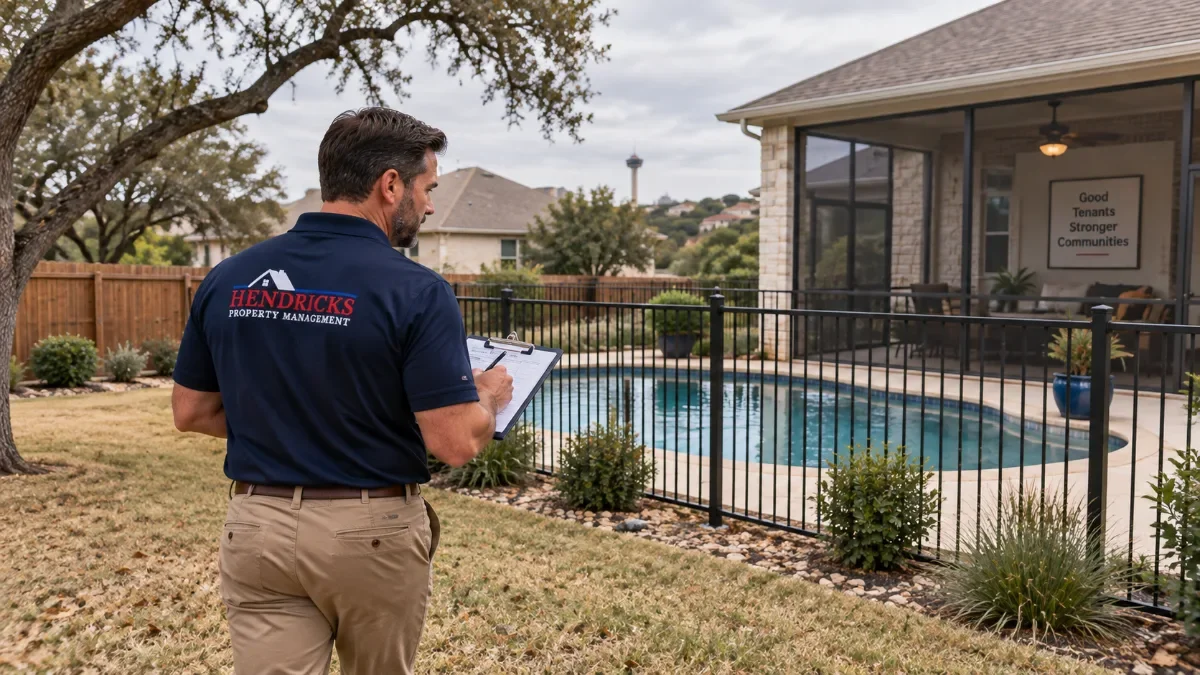
In a San Antonio single-family rental, routine pest control, lawn upkeep and pool maintenance are almost always the tenant's job under the lease and under the City's adopted property maintenance code - but three things never move off the owner: eliminating an existing infestation before the tenant moves in, fixing anything that materially affects the tenant's health or safety, and every code violation the City cites, because the City cites the property owner. Get those three right and the rest is a drafting exercise.
This is general information, not legal advice, and is current as of September 2026. Talk to a Texas attorney about your specific lease and property.
One distinction decides every argument
Texas splits outdoor and pest obligations along one line: is this a condition materially affecting the physical health or safety of an ordinary tenant, or housekeeping?
The duty comes from Section 92.052 of the Texas Property Code, which obliges a landlord to make a diligent effort to repair a condition when the tenant has given notice, is current on rent, and the condition materially affects health or safety. The statute never lists examples. The State Bar of Texas and the Texas Young Lawyers Association fill that gap in the Tenants' Rights Handbook, which names sewage backups, roaches, rats, faulty wiring and roof leaks - and adds that a condition violating the city's building or health code is more likely to count.
That last clause matters enormously in San Antonio, because the City has adopted a detailed property maintenance code that says who does what. Above the line - infestation, standing water, a broken pool barrier - the duty is statutory and the lease has very little room to move it. Below the line - mowing, edging, skimming leaves, monthly preventive spraying - the lease is king.
Would a reasonable person call this a health or safety problem, or a chore? Would a City inspector write it up? If either answer is yes, it is yours to fix now and argue about later. Cost recovery happens at renewal or move-out, never by refusing to act.
Pest control in a San Antonio rental
No Texas statute assigns pest control to the landlord by name. The allocation comes from the San Antonio Property Maintenance Code, Section 309, and it is unusually clear:
| SAPMC section | Rule | Practical effect |
|---|---|---|
| 309.1 Infestation | Structures shall be kept free from insect and rodent infestation; where found, promptly exterminated | The baseline - somebody must act |
| 309.2 Extermination prior to occupancy | Where infestation exists, the owner is responsible for extermination within the structure prior to renting or leasing | Never hand over keys to an active problem |
| 309.3 Single occupant | The occupant of a one-family dwelling is responsible for extermination on the premises | Routine pest control in a detached house sits with the tenant |
| 309.4 Multiple occupancy | The owner is responsible in public or shared areas and exterior property of a two-or-more-unit structure | Duplex and fourplex owners carry far more |
| 309.5 Occupant + exception | The occupant keeps the structure pest-free; but where infestations are caused by defects in the structure, the owner is responsible | A gap under the siding is your bill |
Read 309.3 and 309.5 together and the everyday answer for a Stone Oak or Converse rental house is: the tenant handles the ants, the wasps and the quarterly spray. Read 309.2 and the 309.5 exception and the exposure is obvious - a pre-existing German roach population, or rats entering through an unsealed soffit, is a structural failure and the cost lands on you whatever the lease says. Section 302.5 (rodent harborage) and 302.2 (stagnant water) point the same way.
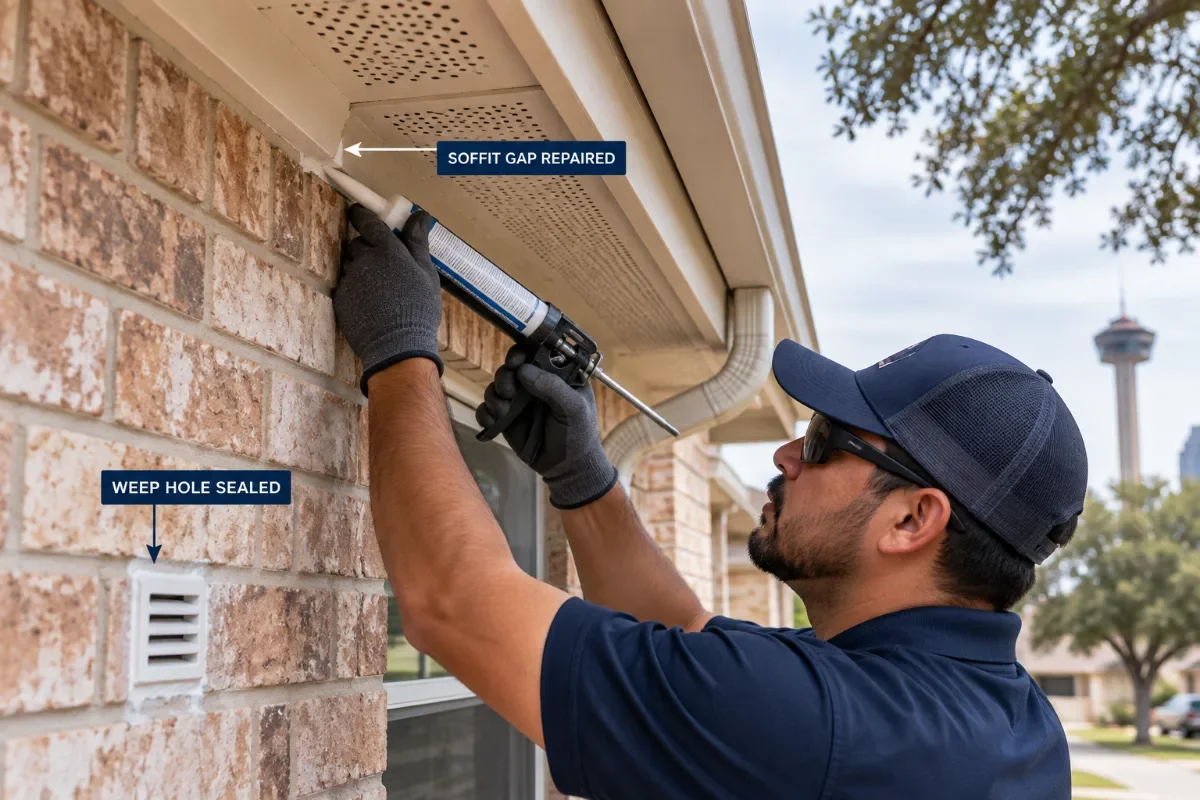
Once a tenant gives notice on the health-and-safety side, Section 92.056 starts a clock: a rebuttable presumption that seven days is a reasonable time to repair.
Both sit on the health-and-safety side of the line in practice, so that seven-day clock applies. Absent a diligent effort the tenant may terminate the lease, use repair-and-deduct, or sue. Treat an infestation report as an emergency ticket, not a scheduling problem.
Yards, lawns and landscaping
Ordinary lawn care is not a Chapter 92 condition. Nobody's health or safety turns on whether the St. Augustine got cut this week, so the lease decides - and it should decide in detail.
What is not negotiable is the code. Section 302.4 requires all improved premises and exterior property to be maintained free from weeds or plant growth in excess of twelve inches in height, with noxious weeds prohibited - though cultivated gardens, native grasses and perennials installed as part of a landscaping design are carved out. Section 302.1 requires exterior property to be kept clean, safe and sanitary and free of hazardous vegetation.
Here is the trap. Under Section 301.2 the owner must maintain the structure and exterior property in compliance - the occupant's duty runs only to the part they occupy or control. When a neighbour calls 311 about knee-high grass, the citation is the owner's problem, and the lease is the only mechanism that moves that cost back. A yard clause that works names five things: cut frequency (weekly April through October in Bexar County, biweekly in winter), edging and bed weeding, tree and shrub trimming, irrigation and reporting broken heads, and who pays if the City cites the property.
On a quarter-acre-plus lot, a contracted mow service you control is cheaper than one 311 abatement plus a turnover re-sod. Fold it into the rent and keep the vendor - tenants who inherit an established service almost never let a yard fail.
Swimming pools: the biggest single liability in the portfolio
Two separate regimes apply, and owners routinely reach for the wrong one.
Chapter 757 does not cover your rental house. Section 757.002 of the Texas Health and Safety Code limits the pool-yard-enclosure chapter to a pool owned, controlled or maintained by the owner of a multiunit rental complex or by a property owners association. A detached single-family rental with a private pool is outside it.
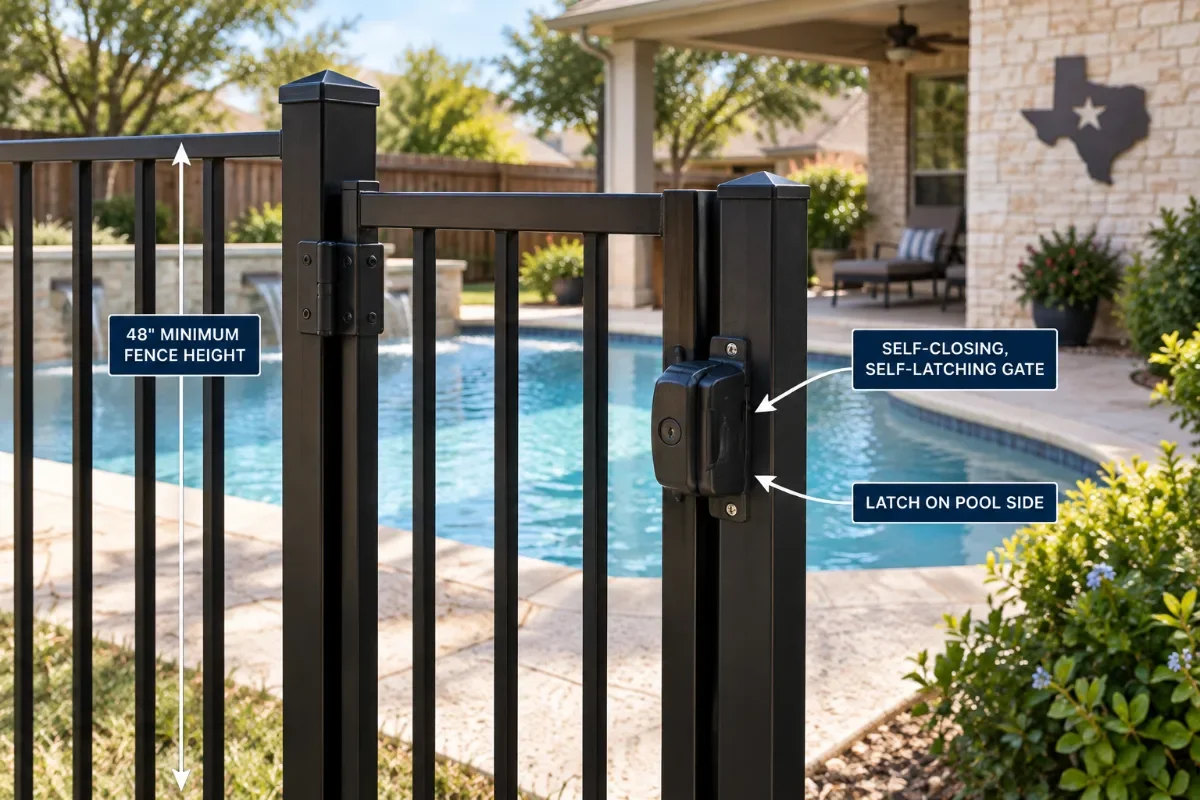
The City's code does cover it. SAPMC Section 303.1 requires pools, spas and hot tubs to be maintained in a clean and sanitary condition and in good repair. Section 303.2, which applies to existing private outdoor pools built before January 1, 2010, requires any private pool, hot tub or spa holding more than 24 inches of water to be completely surrounded by a fence or barrier at least 48 inches high, measured from the ground on the side away from the pool. Gates must be lockable or self-closing and self-latching; where the latch sits less than 54 inches above the bottom of the gate, the release must be on the pool side. Privacy fences may serve as the enclosure, and no existing enclosure may be altered in a way that reduces its effectiveness.
Barrier integrity is a safety-side item. It is yours, full stop, and should be photographed at every inspection. Water chemistry and cleaning can sit with the tenant - but think hard first. A pool left to go green in a South Texas August becomes a mosquito-breeding standing-water problem within a week and turns a $200 service call into a $1,500 drain-and-acid-wash.
You keep the vendor, the chemical log and the equipment records; the tenant pays a disclosed monthly amount. If a claim is ever made you can produce a service history instead of a shrug.
What your lease can and cannot shift
This is where most Texas owners over-reach. Section 92.006 of the Texas Property Code sets hard limits on waiver of the repair duties:
- 92.006(c) - the landlord's duties and the tenant's remedies under Subchapter B, covering conditions materially affecting health or safety, may not be waived except under (d), (e) and (f).
- 92.006(d) - you may agree the tenant will repair or remedy such a condition at the landlord's expense. Always available; this is how a legitimate tenant-arranges-the-vendor clause works.
- 92.006(e) - the tenant may repair at the tenant's expense only if all four conditions are met: at the start of the lease term the landlord owns only one rental dwelling; the dwelling was free of any such condition; the landlord had no reason to believe one was likely to occur or recur; and the lease is written, with the repair agreement underlined or in boldface (or in a separate addendum), specific and clear, and made knowingly, voluntarily and for consideration.
- 92.006(f) - three items you may always push to the tenant, subject to the same formalities: wastewater stoppages from foreign objects in lines exclusively serving the dwelling, damage to doors, windows or screens, and damage from windows or doors left open.
Notice what is absent. Pests, lawns and pools are not in 92.006(f). A lease clause making the tenant pay for a rat infestation caused by a structural gap is therefore unenforceable against any owner holding two or more rentals - and most of our clients hold more than one. The workaround is 92.006(d): the tenant may arrange the work; you pay. Cosmetic upkeep stays freely assignable because it never crossed the health-and-safety line.
| Item | Health/safety condition? | Who normally pays in a single-family rental |
|---|---|---|
| Roach or rodent infestation present at move-in | Yes | Owner - SAPMC 309.2, no exceptions |
| Rodents entering through a structural gap | Yes | Owner - SAPMC 309.5 exception |
| Quarterly preventive spray, ants, wasps | No | Tenant, if the lease says so |
| Bed bugs introduced by the tenant's furniture | Yes, but see 92.052(b) | Owner remediates; cost often chargeable |
| Mowing, edging, bed weeding | No | Tenant, or owner-contracted and reimbursed |
| Grass over 12 inches drawing a City citation | Code violation | Owner is cited; recover under the lease |
| Pool barrier, gate latch, self-closing hinge | Yes | Owner, always |
| Weekly pool service and chemicals | No | Either - contract it yourself |
When the tenant lets it go
Treat it as a lease-compliance matter with a paper trail, not a maintenance ticket: written notice citing the clause, a cure date, date-stamped photos taken the day the notice goes out, and a follow-up inspection. If it is not cured, your lease remedies and ultimately the eviction path apply - our walkthrough of the eviction process in San Antonio sets out the Bexar County sequence.
Two cautions. Self-help is illegal - never shut off water to force a pool cleanup. And watch the sequence: Section 92.331 prohibits retaliation against a tenant who gave a repair notice or complained to code enforcement in good faith, with a penalty of one month's rent plus $500, actual damages, costs and attorney's fees. If a tenant reported a rodent problem in March, an April notice about the lawn needs a clean record behind it. Where a tenant is trying to exit instead, our guide to how to break a lease in Texas covers the termination routes, and the Texas State Law Library's repair guide is worth reading for what your tenants are being told.
Owners weighing whether an outdoor-heavy property is worth the overhead can see how we present comparable San Antonio homes for rent first.
We manage single-family homes across Bexar County, pools included. We write the pest, yard and pool obligations as a signed addendum, contract the vendors, keep the logs and photograph barriers and grass height at every inspection - so "who was responsible" is on file before anyone asks.
Frequently Asked Questions
Is pest control the landlord's responsibility in Texas?
It depends on the severity and the property type. There is no Texas statute that names pest control as a landlord duty. Under Sec. 92.052 the owner must make a diligent effort to repair a condition that materially affects the physical health or safety of an ordinary tenant, and the State Bar's Tenants' Rights Handbook lists roaches and rats as examples of exactly that. Routine, preventive spraying in a single-family house is a different thing: under Sec. 309.3 of the San Antonio Property Maintenance Code the occupant of a one-family dwelling is responsible for extermination on the premises.
Who pays for pest control in a rental before move-in?
The owner. Sec. 309.2 of the San Antonio Property Maintenance Code is explicit: where infestation exists, the owner of any structure is responsible for extermination within the structure prior to renting or leasing it. Handing over keys to a unit with an active roach or rodent problem is a code violation on day one and hands the tenant a health-and-safety argument under Chapter 92.
Can my lease make the tenant pay to fix a health-and-safety problem?
Almost certainly not, if you own more than one rental. Sec. 92.006(c) says Subchapter B duties may not be waived except under subsections (d), (e) and (f). Subsection (e) lets a tenant repair at the tenant's own expense only if - among other conditions - the landlord owns only one rental dwelling at the start of the lease term, the dwelling was free of any such condition then, and the agreement is in writing, underlined or in boldface, specific and clear. Own two houses and that door is closed.
Can I make the tenant mow the lawn?
Yes. Ordinary lawn and landscape upkeep is cosmetic, not a condition materially affecting health or safety, so Sec. 92.006's waiver limits are not in play and the lease governs. Say exactly what you mean - mowing frequency, edging, bed weeding, tree and shrub trimming, irrigation - and name who calls the vendor. Vague yard clauses are the single most common cause of turnover disputes we see in Bexar County.
How tall can grass get before the City of San Antonio cites the property?
Twelve inches. Sec. 302.4 of the San Antonio Property Maintenance Code requires all improved premises and exterior property to be kept free of weeds or plant growth in excess of twelve inches in height, and prohibits noxious weeds. Native grasses, cultivated gardens and perennials installed as part of a landscaping design are carved out. Enforcement runs against the property owner, not the tenant, so your lease is the only tool that recovers the cost.
Does Texas require a fence around the pool at my single-family rental?
Not under Chapter 757 of the Health and Safety Code - Sec. 757.002 limits that chapter to pools owned or maintained by the owner of a multiunit rental complex or a property owners association. Your detached rental house is still covered by the City of San Antonio's adopted code: Sec. 303.2 requires private pools, hot tubs and spas holding more than 24 inches of water to be completely surrounded by a fence or barrier at least 48 inches high, with lockable or self-closing, self-latching gates.
Can I charge the tenant a monthly pool or lawn service fee?
Yes, and for a pool it is usually the smarter structure. Contract the service yourself, keep the vendor relationship and the chemical logs, and recover the cost as a separate recurring charge disclosed in the lease. You keep control of the equipment and the water chemistry - which is what your insurer and a premises-liability plaintiff will ask about - instead of hoping a tenant kept up with it.
The tenant let the pool go green and the yard is knee-high. What can I do?
Treat it as a lease violation, not a maintenance ticket. Send written notice citing the specific clause, give a cure deadline, photograph the condition on the date of the notice, and follow your lease's remedy ladder. Do not shut off water or change locks. And check your timing against Sec. 92.331 - if the tenant recently gave you a repair notice or called code enforcement, an eviction filed close behind can look like retaliation even when it is not.