
Which Side of the Fence is Mine? A Step-by-Step Guide
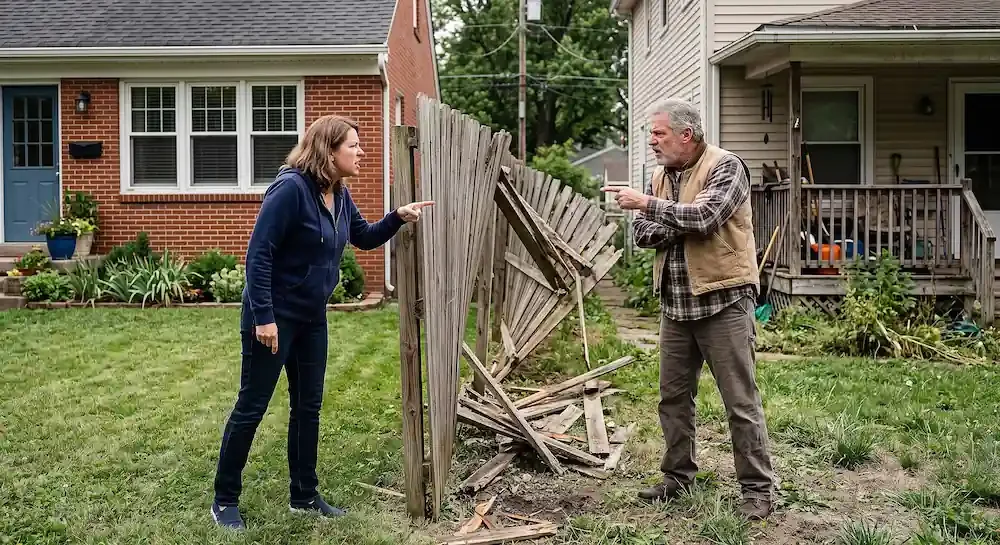
You walk the back yard, spot a leaning panel, and the question shows up fast. Which side of the fence is mine?
Most homeowners assume there is a national rule that settles it, something like "the side with the posts belongs to you." There is no such rule. Fence ownership comes from paperwork, not from which way the boards face.
This guide walks you through how to find your property line, how to tell who owns the fence between two yards, what the law does and does not say, and how to split repairs without starting a feud. It is general information for homeowners, not legal advice. Anything contested should go to a real estate attorney in your state.
Understanding Property Lines
Defining Property Boundaries
Your property boundary is a legal line, written down before the fence ever went up. Two documents describe it:
Your deed. This carries the legal description of your land. In a subdivision it usually reads as a lot and block number tied to a recorded plat. On acreage it may read as metes and bounds, a series of distances and directions.
The recorded plat. This is the subdivision map filed with the county. It shows lot lines, dimensions, easements, and setbacks.
Out in the yard, the line is usually marked by iron rods or pins driven at the lot corners when the subdivision was built. Sidewalk corners, driveway edges, and hedges are not the line. Neither is the fence.
Importance of Clear Boundaries
Knowing the real line changes several decisions:
Who pays when a fence section blows over
Whether you can replace, move, or remove the fence at all
Where a shed, pool, deck, or addition can legally sit
Whether a permit application gets approved
What a title company or buyer flags when you sell
A fence sitting a foot inside the wrong lot can sit there quietly for years and then become a real problem at closing. That is the moment most owners find out.
Fences: Which Side is Mine?
Once you know where the line runs, fence ownership usually falls into one of three setups.
The fence sits entirely on your lot. You own all of it, including the face your neighbor looks at. You control the style, the upkeep, and whether it stays. The tradeoff is that you gave up use of the strip of land between the fence and the true line.
The fence sits entirely on your neighbor's lot. It is theirs. You do not get to paint your side, nail a trellis to it, or hang a gate on it without asking.
The fence straddles the line. This is often called a boundary fence or a division fence. When both owners share it, neither one should remove it or make major changes to it without the other agreeing.
In newer subdivisions the builder installed the fence, and the builder decided where it went. Some builders set it dead on the line. Others set it a few inches inside one lot. The plat and a survey will tell you which happened on your street.
Common Misconceptions
"The side with the posts and rails is mine." This is the most repeated fence myth in the country. Installers do tend to put the frame toward the owner's yard and the finished face toward the neighbor, so the rule of thumb lands correctly a lot of the time. It still proves nothing. A fence built on your neighbor's dirt is still theirs, no matter where the rails ended up.
"The fence on the left is always yours." That idea traces back to British property customs where some deeds mark boundary responsibility with a T symbol. It has no basis in US property law.
"The fence is the property line." Fences get rebuilt, shifted around tree roots, and set back on purpose so a crew can work without stepping next door. Treat the fence as a clue, not as evidence.
"I paid for it, so I own the ground under it." Paying the invoice does not move your boundary. If you paid for a fence that sits on your neighbor's land, you may have just improved their property.
By Law: Which Side of the Fence is Mine?
There is no federal law on residential fence ownership. The answer depends on your state's law, your city or county code, your HOA rules, and any agreement you and your neighbor signed.
The general pattern across most of the country is straightforward. Ownership follows the land the fence stands on. A fence built on the line is usually treated as shared.
Texas is a good example of how thin the state-level rules can be. The Texas State Law Library's neighbor law guide states that Texas has no specific state statute covering who owns or maintains a boundary fence, and that court decisions have shaped the answer instead. The guide also states the general rule that a Texas landowner has no legal obligation to share in the cost or the future upkeep of a fence a neighbor built on the dividing line, unless that owner agreed to. Cities can and do add their own fence rules on top of that.
What about the finished side facing out? Plenty of cities and most HOAs require the finished side of a fence to face the street or the neighboring lot. That requirement comes from local code and HOA rules, not from a statewide law, at least in Texas. Check your city's fence ordinance and your HOA architectural guidelines before a crew sets a single post, because rebuilding a fence backwards is an expensive mistake.
Many owners sidestep the whole argument with a "good neighbor" fence, built so both sides look the same. Nobody gets the ugly view, and nobody argues about which way it faces.
Determining Fence Ownership
Here is the order I would work through it.
Step 1: Pull your deed and your plat. Both are usually available through the county clerk's office, and many counties post them online. Your county appraisal district site often shows a lot sketch with dimensions too. Look for easements along the rear or side lot lines while you are there.
Step 2: Look for an existing survey. If you bought with a mortgage, a survey was probably part of the closing file. Check with your title company. An old survey often shows exactly how far the fence sits from the line, which may answer the question in five minutes.
Step 3: Find the corner pins. A cheap metal detector will locate the iron rods at the lot corners in most yards. Pull a string between two pins and you can see how the fence lines up. This is a good sanity check, though it is not proof on its own.
Step 4: Order a boundary survey if the answer is still unclear. A licensed surveyor marks the corners and shows how far the fence sits off the line. Cost depends on lot size and your market, so call two local surveyors for quotes. If the fence is coming down and going back up, this is money well spent.
Step 5: Read your HOA documents and your city's fence rules. Height limits, material rules, corner visibility rules, permit requirements, and the finished-side rule all live here.
Step 6: Write down whatever you and your neighbor agree to. Do this before the demo, not after.
Analyzing Neighbor Agreements
A written agreement can override the default. It is the one document that tends to settle things quickly when someone's memory gets fuzzy.
Put these in it:
How the cost is split, with a dollar amount or a percentage
Who hires the contractor and who holds the warranty
What material, height, and finish everyone agreed on
Who handles upkeep and staining going forward
What happens when the fence is damaged or reaches the end of its life
Two more things worth doing. Sign it, both of you, and keep copies. And ask an attorney whether recording it with the county makes sense in your state, because a handshake with the current neighbor does nothing once that house sells.
The Role of Surveys
A boundary survey is the only document that tells you where your line actually is on the ground. The surveyor works from the recorded plat and legal description, sets or recovers the corner markers, and produces a drawing that shows improvements including the fence.
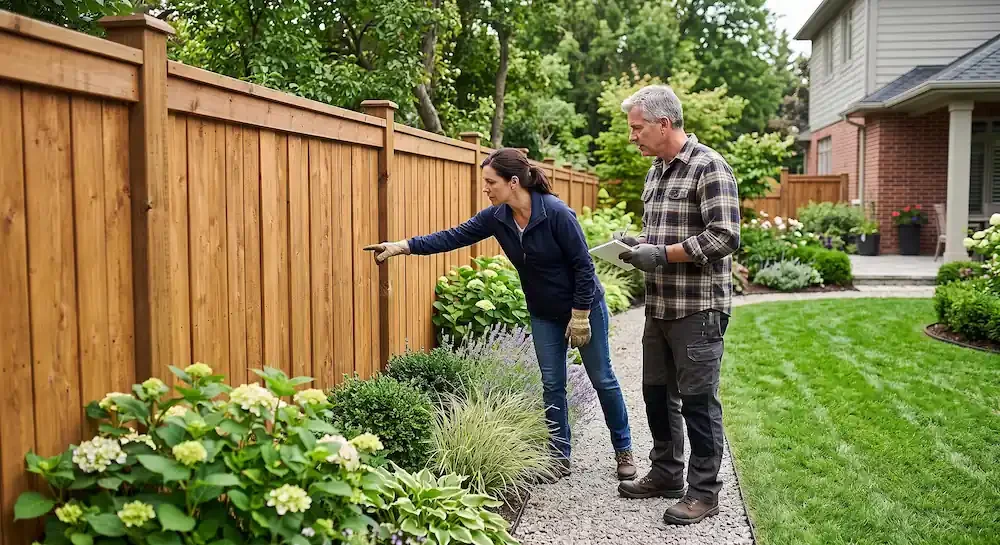
A survey from your closing may predate the current fence. If the fence has been replaced since then, the old drawing tells you where the line is but not where today's fence sits. Get an updated one before you build anything permanent near the line, before you argue about a few inches, and before you list the house if the fence placement looks questionable.
Identifying the Safe Side of the Fence
What is the Safe Side of the Fence?
In the fencing trade, the safe side usually means the smooth, finished side with no exposed horizontal rails. The framed side, where the rails and posts show, is sometimes called the rail side or the bad side.
Two situations where this matters beyond looks:
Pools. Pool barrier codes in many places require climbable horizontal members to be on the pool side of the fence, so a child outside the fence cannot use the rails like a ladder. Check your local pool code before choosing an orientation.
Animals. For livestock and large dogs, boards or wire usually go on the animal side so pressure pushes against the posts instead of pulling the fasteners out.
Implications of the Safe Side on Property Value
Be careful with claims here. I have not seen credible data putting a dollar figure on which direction a fence faces.
What does show up in real transactions is simpler. A fence with the rough side facing the street reads as sloppy to buyers and can draw an HOA violation letter. A pool fence built the wrong way around gets flagged by an inspector and can hold up a sale until it is fixed. Both turn into price negotiations, which is the practical cost of getting it backwards.
Resolving Disputes with Neighbors
Effective Communication Strategies
Most fence fights are avoidable, and almost all of them start with a surprise.
Talk before you schedule anything. Knock on the door instead of sending a text.
Bring paper. The plat, the survey, and two written bids make the conversation about facts instead of feelings.
Offer a specific split rather than asking an open question about money.
Give notice before crews and equipment show up in the yard.
Photograph the fence and the corner pins before any demo work starts.
Keep dates, receipts, and copies of everything you send.
Legal Recourse if Necessary
When talking fails, work up the ladder rather than jumping to the top of it.
HOA. The architectural committee handles violations inside a covered neighborhood, including fences built out of spec.
City code enforcement. Height, material, permit, and corner visibility problems belong here.
A letter from a real estate attorney. This resolves more than people expect, and it costs far less than filing suit.
Small claims or civil court. Dollar limits and procedures vary by state, so check your local court's rules.
One thing to raise with an attorney rather than solve yourself. A fence that has sat in the wrong place for many years can create a legal claim to that strip of land. Texas has an adverse possession statute with a ten year period, and Texas courts have also limited how far a fence alone can carry such a claim. The details decide the outcome, and the details are worth a consultation if real square footage is on the line.
Maintenance Responsibilities
Which Side of the Fence is Mine to Repair?
Fence entirely on your lot. You repair the whole thing, both faces. You may need your neighbor's permission to step into their yard to reach the far side, so ask early.
Fence entirely on their lot. They repair it. Do not stain, cut, or attach anything to your side without their okay, since damage you cause to their structure is on you.
Fence on the line. Repairs are shared in practice, though in Texas nobody can force a neighbor to pay without an agreement. Bring a written proposal and a bid instead of a demand.
Storm damage. Fences usually fall under the other structures coverage on a homeowners policy, subject to your deductible. Coverage limits and wind or hail deductibles vary, so call your carrier before assuming a claim makes sense.
If the house is a rental, the fence is still the owner's responsibility in nearly every lease. Spell that out in writing so a tenant does not hire their own contractor, and so nobody is guessing after the next storm.
Best Practices for Shared Fences
Get the agreement in writing before the first post comes out.
Keep the new fence in the same footprint unless a current survey says otherwise.
Agree on height, material, and stain color up front, including the finished side direction.
Photograph the pins and the old fence before demo.
Save the survey, the agreement, the permit, and the receipts in one folder.
Hand that folder to the next owner, or give a copy to your property manager.
Frequently Asked Questions
-
No US law assigns you a side. Ownership follows the land the fence sits on, based on your deed, the recorded plat, and a survey. Local code and HOA rules control how the fence is built, including which way the finished side faces.
-
The side you own. A fence entirely on your lot is yours to repair in full. A fence on your neighbor's lot is theirs. A fence on the shared line is usually repaired by agreement between both owners.
-
Same answer. Texas has no state statute naming an owner for a boundary fence, so it comes down to where the fence sits relative to your line, plus city rules, HOA rules, and any written agreement. A Texas owner generally has no duty to help pay for a neighbor's fence unless they agreed to.
-
Not necessarily. Installers often face the rails toward the owner, which is where the myth comes from. It is a habit, not a rule, and it does not override the deed.
-
In Texas, generally not without an agreement. Other states have cost sharing statutes for boundary fences, so check your state's rules before you assume either way.
-
The smooth, finished side without exposed horizontal rails. Pool codes and animal enclosures often dictate which direction it has to face.
Conclusion and Next Steps
Summary of Key Points
The fence is not proof of the property line. Your deed, the plat, and a survey are.
Ownership follows the land the fence stands on. A fence on the line is usually shared.
No national law picks a side for you, and Texas has no state statute on boundary fence ownership.
The finished-side rule comes from your city and your HOA, so look it up before you build.
A short written agreement with your neighbor prevents most of the fights people end up having.
Resources for Further Guidance
Your county clerk and county appraisal district for the deed, the plat, and lot dimensions
A licensed land surveyor for a current boundary survey
Your city's development services or permitting office for fence height, materials, and permit rules
Your HOA's architectural guidelines and covenants
The Texas State Law Library's neighbor law guide for fences and boundaries in Texas
A real estate attorney for encroachments, long-standing fences, and anything already contested
If the property in question is a rental, this is the sort of thing an owner should not be handling from another city. Hendricks Property Management deals with boundary questions, contractor bids, and neighbor conversations for San Antonio rental owners every week. Reach out for a free rental analysis and we can talk through how your property is being looked after.